



RIB ROIN (リブロース/Ribu Ro-su)
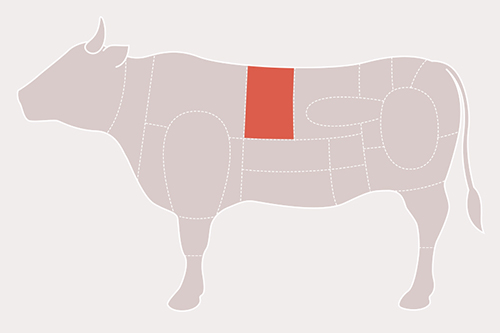
Rib Roin (Wagyu Rib Roin / Ribeye)
~ The ultimate Wagyu cut, perfectly blending the intensity of red meat with high-quality marbling ~
Product Information
Weight per head: approx. 40 kg
Weight per box: approx. 20 kg x 2 boxes
Standard cut size: approx. 3–4 kg / piece
1. What part of the beef is the Rib Roin?
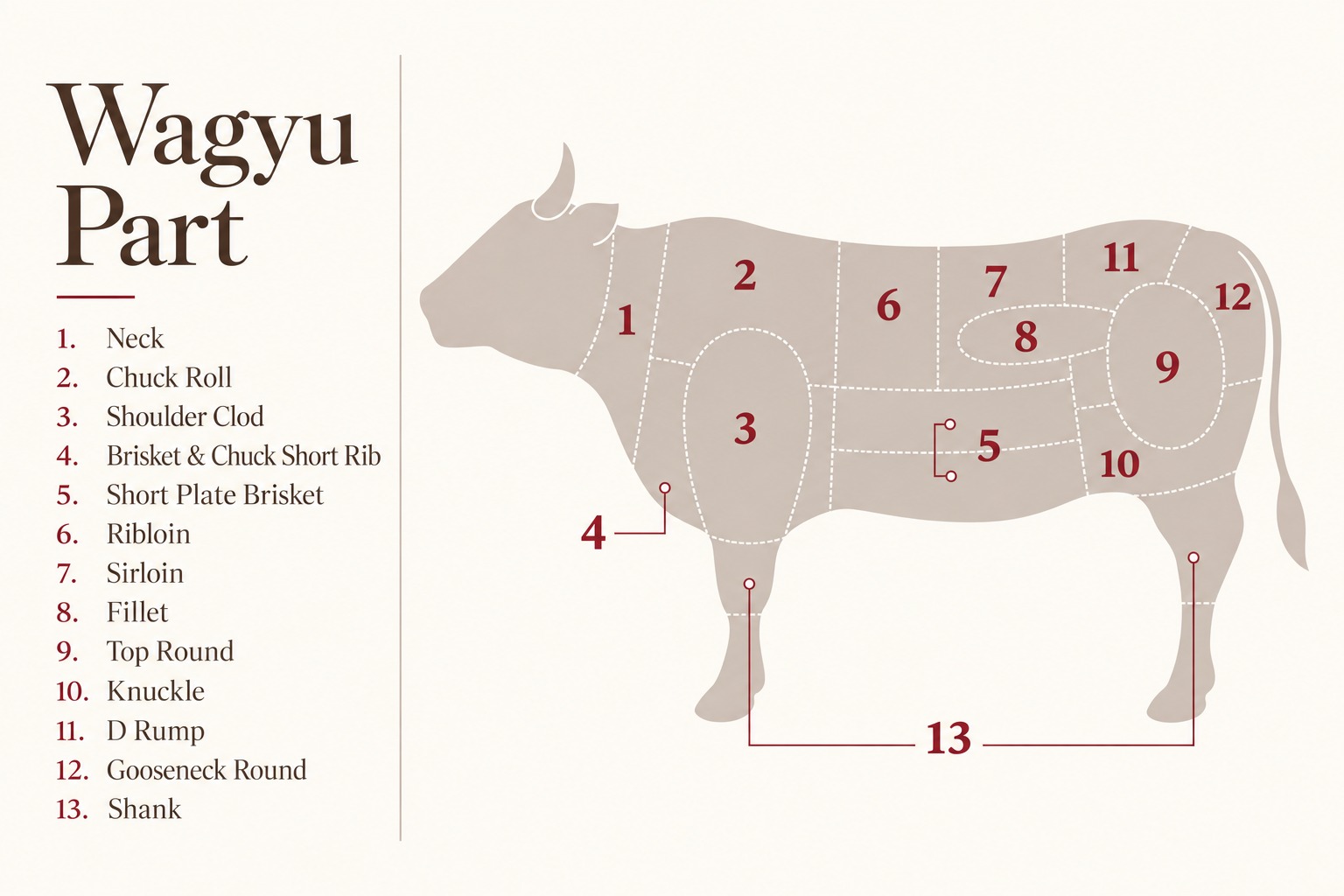
Rib Roin is one of the high-quality cuts of beef, located in the middle of the back between the Chuck Roll (neck/shoulder) and the Sirloin.
The name "Rib" comes from the ribs, as it is the back meat adjacent to the rib cage. Since it is a muscle that is not heavily used, it has an exceptionally tender texture.
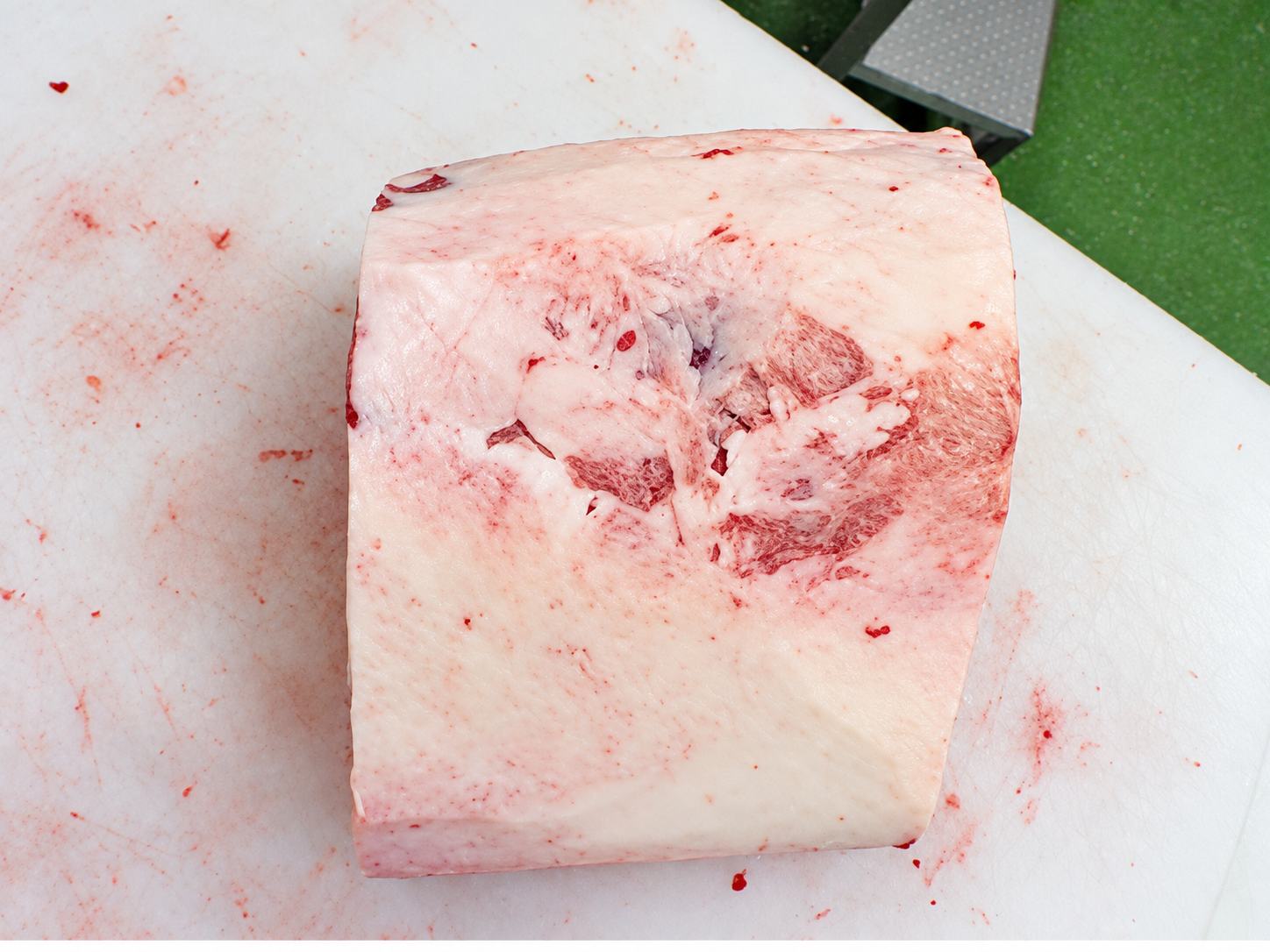
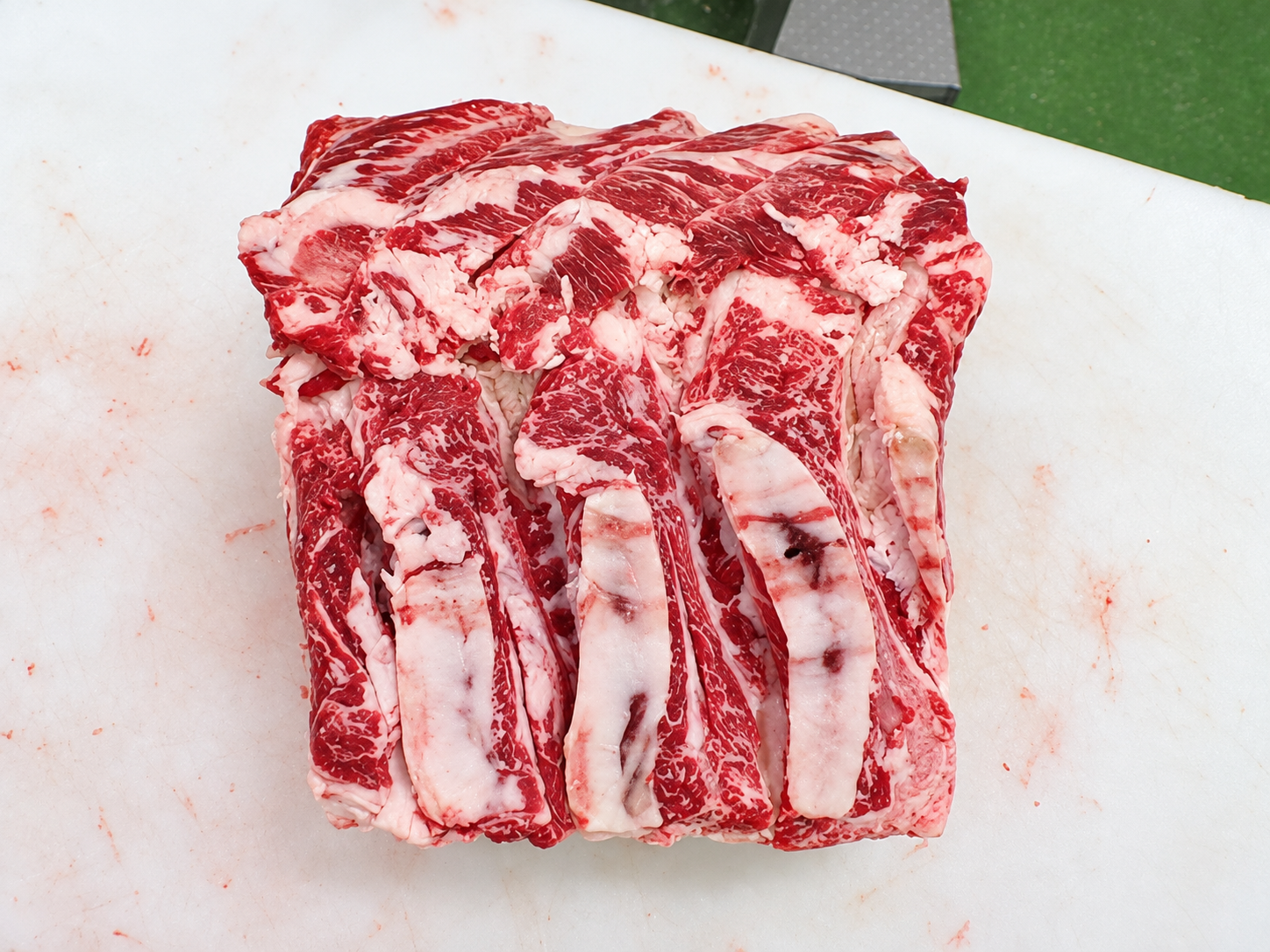
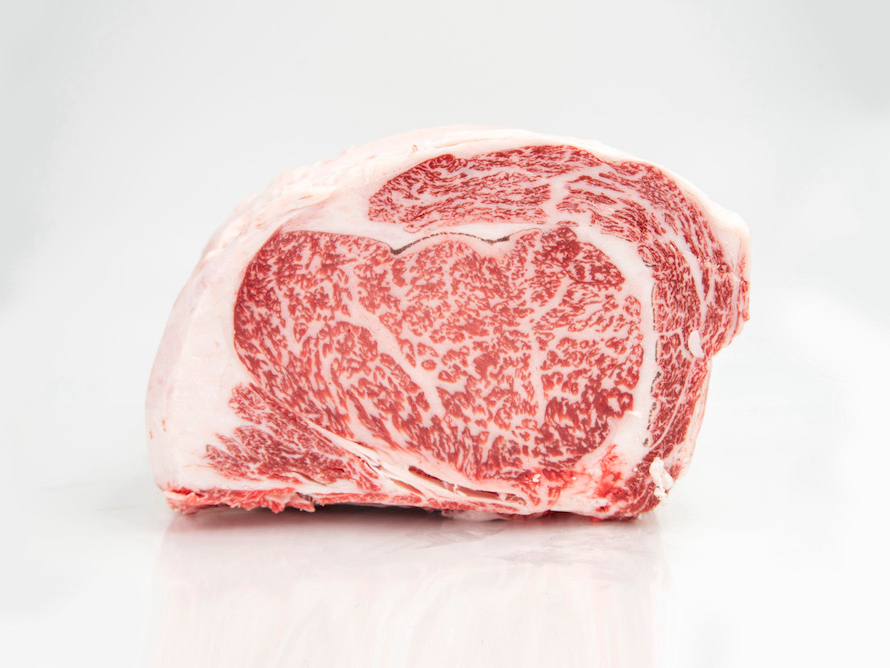
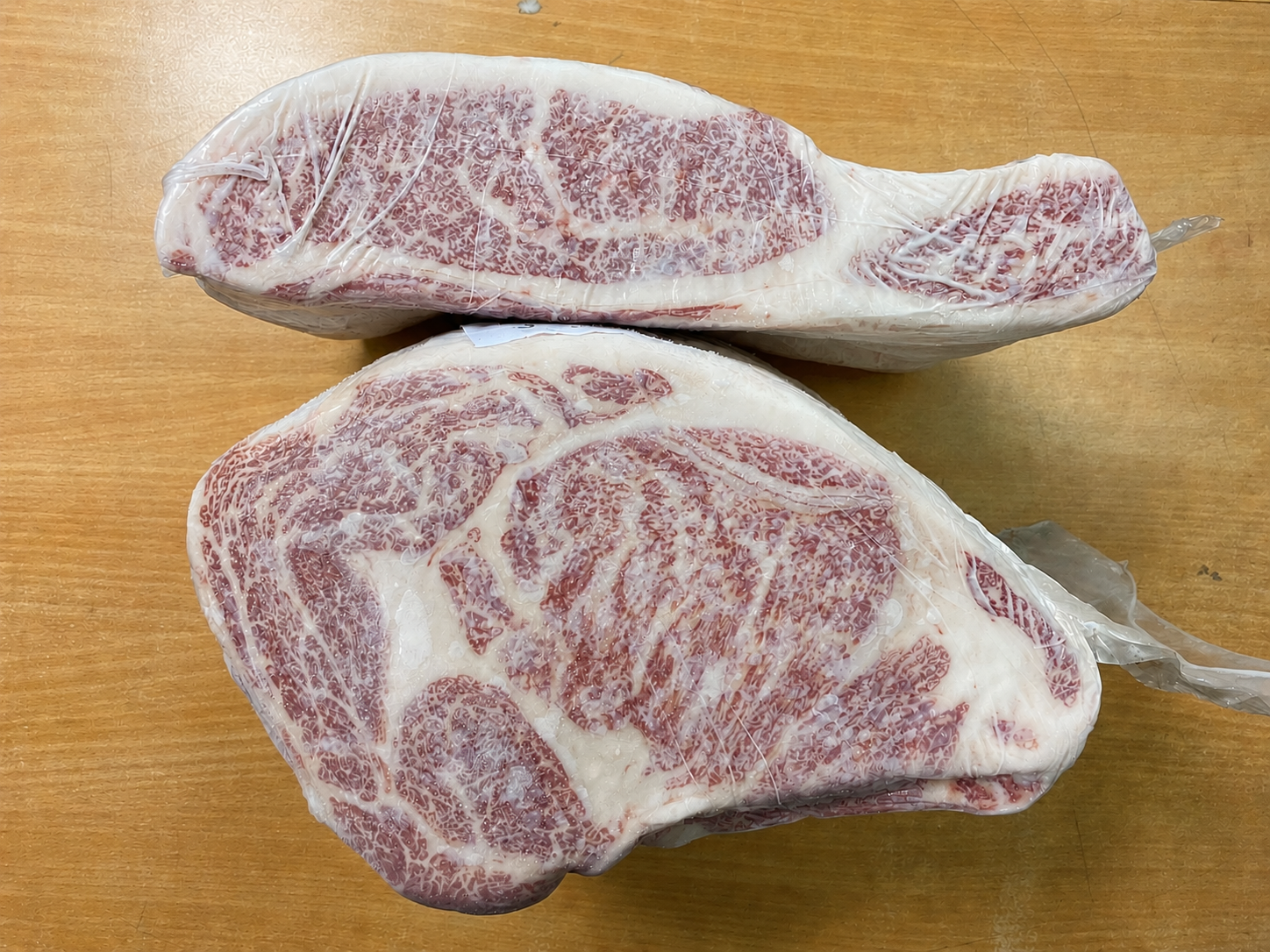
Wagyu Rib Roin is characterized by its beautiful marbling or Sashi, which is distributed in a fine, net-like pattern throughout the meat. Furthermore, the center contains a high-quality portion known as the "Ribeye" or Rib Roin core, renowned for its tenderness and juiciness.
2. The Charm and Popularity of Rib Roin
Melt-in-your-mouth texture
The meat features fine fibers and an ideal amount of marbling, providing a soft, juicy texture that practically melts in your mouth.Unique sweetness and aroma from the fat
Rib Roin is one of the cuts that most clearly expresses the unique "Wagyu Aroma," offering both sweetness and intense flavor in every bite.Beautiful, luxurious marbling
The cross-section of the Rib Roin displays prominent and beautiful marbling, making it ideal as a main course for special occasions, banquets, or as a premium gift.
3. Recommended Cooking Methods and Dishes
To best bring out the flavor of the fat, tenderness, and juiciness of the Rib Roin, we recommend cooking methods that use short-duration heat or precise temperature control.
1. Sukiyaki / Shabu-Shabu (Sukiyaki & Shabu-Shabu)
When Rib Roin is thinly sliced into large sheets and lightly dipped in broth or sukiyaki sauce, the fat melts to the perfect degree, resulting in a tender texture with a rich and well-rounded flavor.
2. Steak
When cut into thick pieces and seared until the exterior is fragrant, you can fully experience the succulent juices and the sweetness of the Wagyu fat.
We recommend enjoying it simply with salt or wasabi to clearly experience the authentic taste of Wagyu beef.
3. Roast Beef
Because Rib Roin has an appropriate amount of marbling, slow-cooking at a low temperature helps maintain the meat's juiciness, resulting in roast beef that is tender, not dry, and perfectly balanced in meat and fat flavor.
SIRLOIN (サーロイン)
Sirloin
~ A premium cut hailed as the "King of Beef" for its tenderness and rich flavor ~
Product Information
Weight per head: approx. 30 kg
Weight per box: approx. 15 kg × 2 boxes
Standard cut size: approx. 3 kg / piece
1. What part of the beef is the Sirloin?
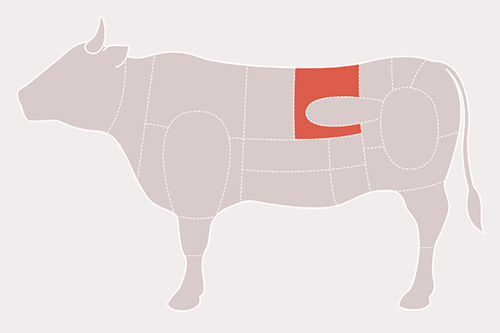
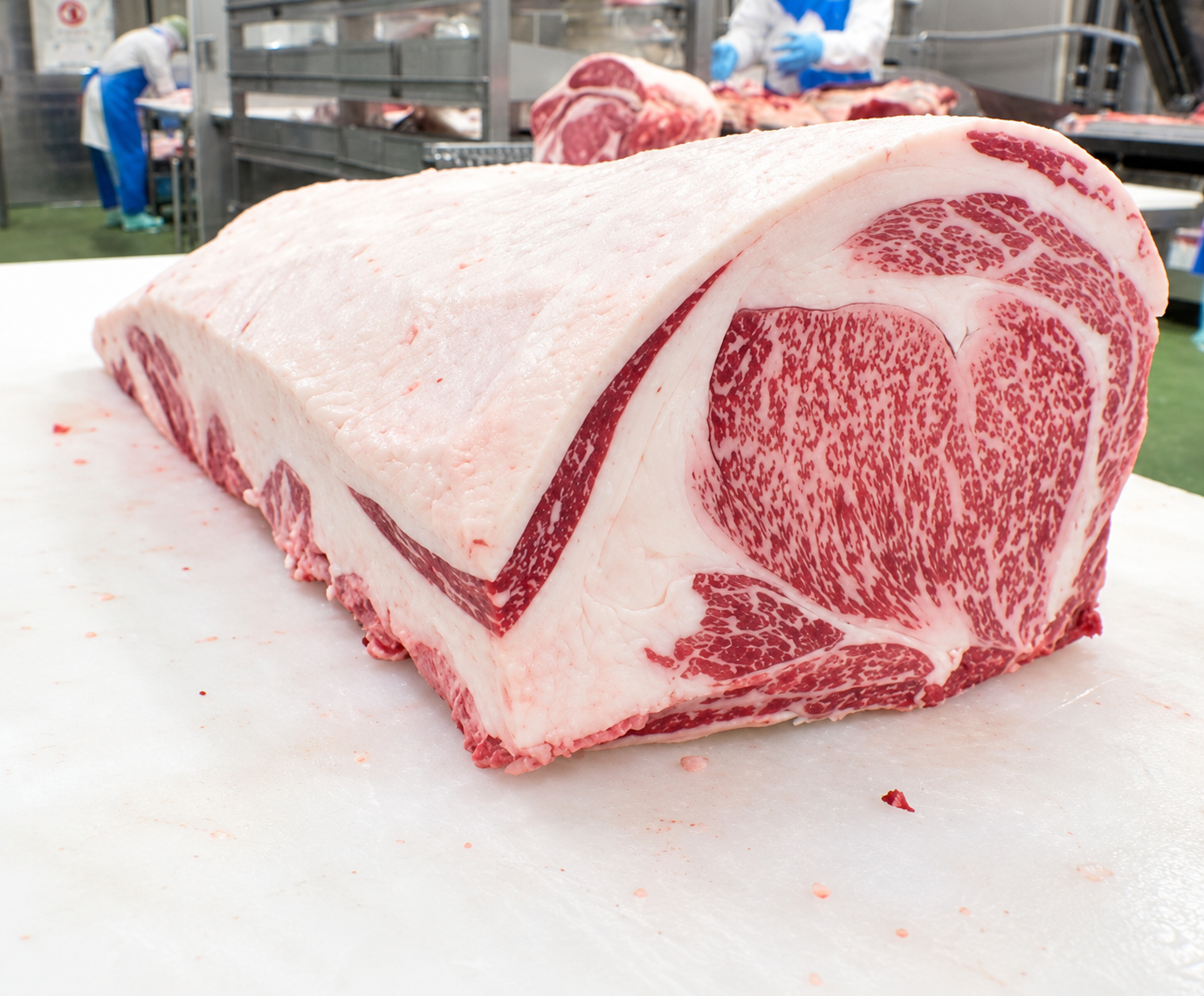
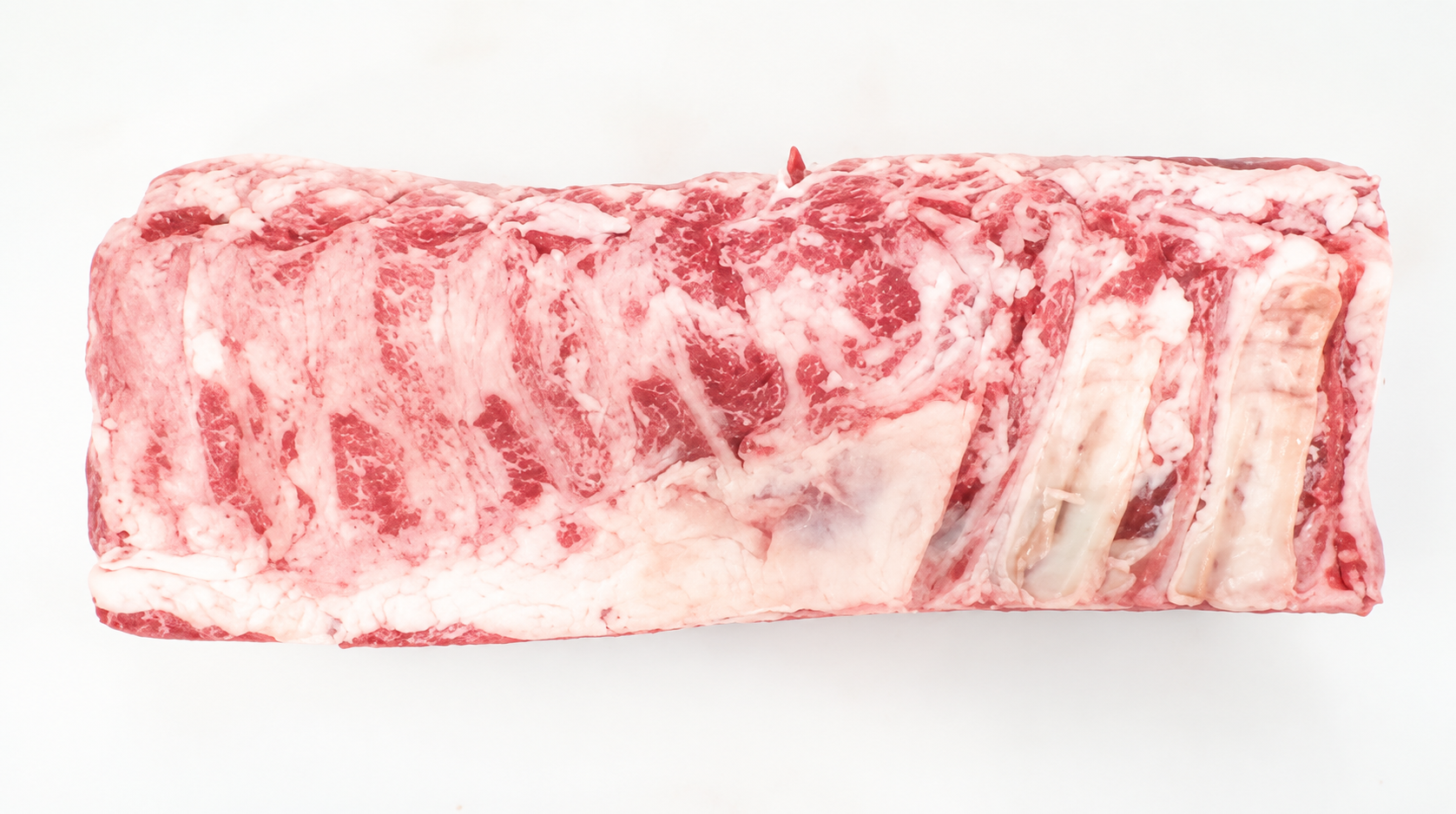
Sirloin is the meat located along the back extending to the loin area. It is adjacent to the Rib Roin and is considered one of the highest quality cuts.
Sirloin is located on the outer side of the spine, while the Tenderloin (Fillet), another premium cut, is located on the inner side.
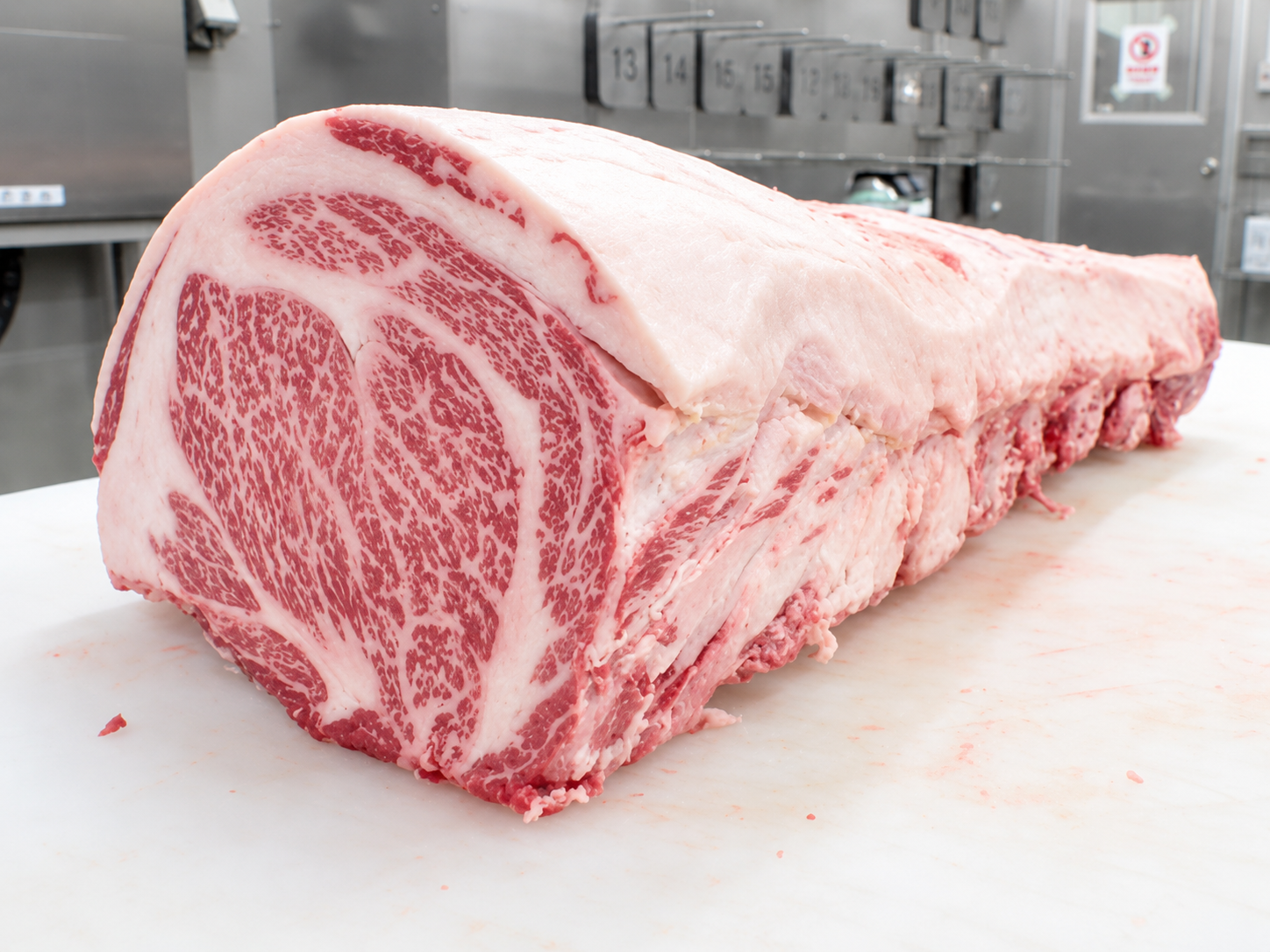
The highlights of Sirloin are its fine, very tender fibers, intense red meat flavor, and a balanced amount of marbling (Sashi).
Even after cooking, the meat remains juicy and does not dry out easily. When chewed, the flavors of the meat and its juices fill the mouth.
2. The Charm and Popularity of Sirloin
Sirloin is a globally recognized cut and is often viewed as a top-tier premium meat. Incorporating Sirloin into a menu or product line enhances a luxurious image and builds consumer confidence.
Due to its relatively uniform shape, it is easy to trim and control portion weights, making it ideal for restaurants and food businesses looking to develop menus and manage costs efficiently.
Furthermore, Sirloin brings out exceptional flavor even with simple cooking methods, making it suitable for special meals at home, as well as premium gifts for important individuals.
Another highlight is its versatility in cooking, whether for Western-style steaks, or Japanese Sukiyaki and Shabu-Shabu; Sirloin fits perfectly.
3. Recommended Cooking Methods and Dishes
1. Steak
One of the most popular ways to prepare Sirloin is to cut it into thick steaks and grill them at high temperatures to fully extract the meat's flavor and juiciness.
2. Barbecue / Charcoal Grill
The aroma from charcoal pairs perfectly with the sweetness of Sirloin fat, enhancing both the scent and the flavor profile.
3. Sukiyaki and Shabu-Shabu (Sukiyaki & Shabu-Shabu)
Thinly slicing Sirloin provides a melt-in-your-mouth texture and highlights the sweetness of the fat.
4. Roast Beef
Slow-cooking at a low temperature preserves the tenderness and juiciness of the meat. Even when served cold, the intense flavor of the red meat remains prominent.
CHUCK ROLL (肩ロース/Kataro-su)
Chuck Roll
~ A perfect balance between the intense flavor of red meat and beautiful marbling in a versatile, high-quality cut ~
Product Information
Weight per head: approx. 44 kg
Weight per box: approx. 22 kg × 2 boxes
Standard cut size: approx. 3 kg / piece
1. What part of the beef is the Chuck Roll?
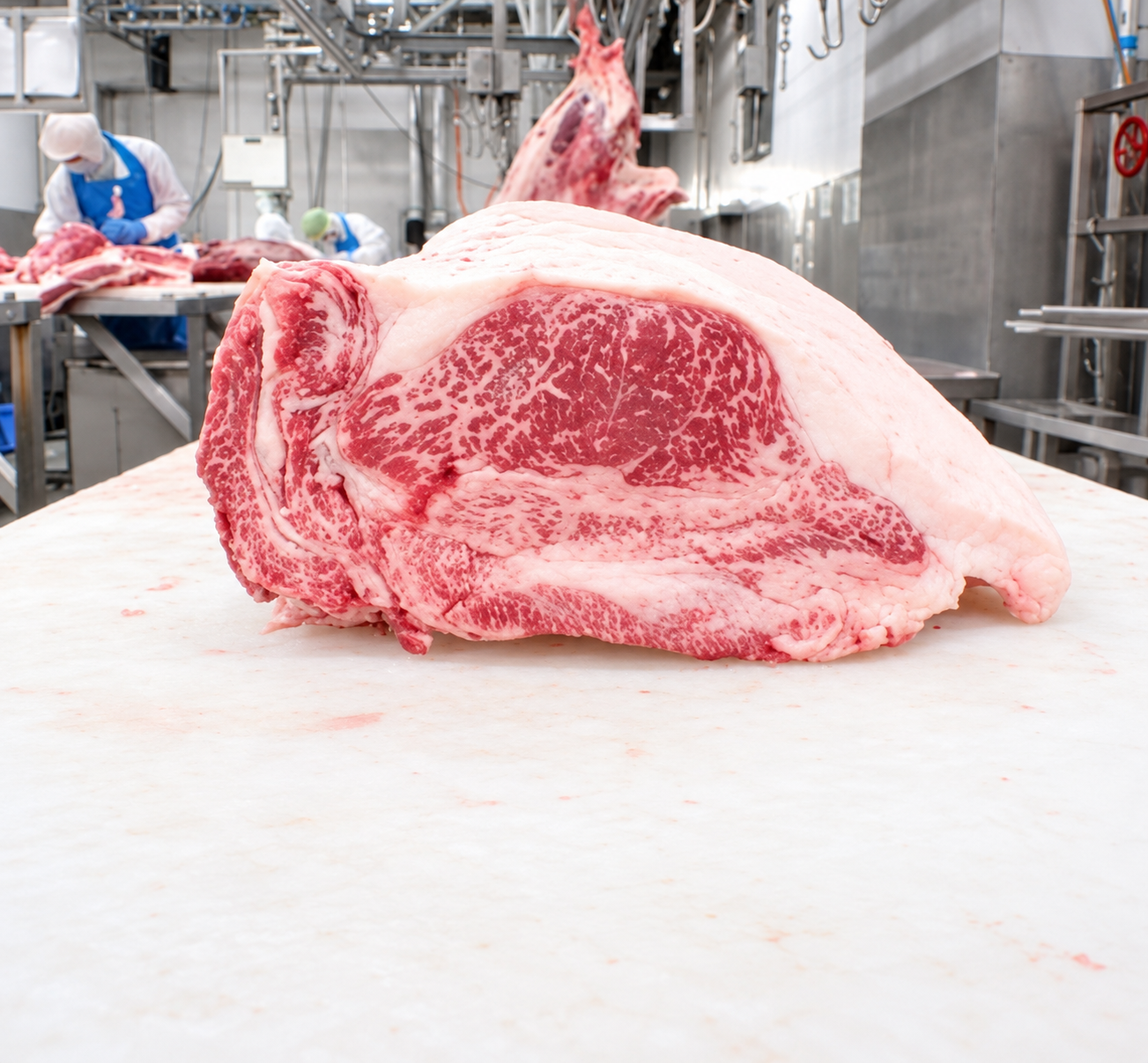
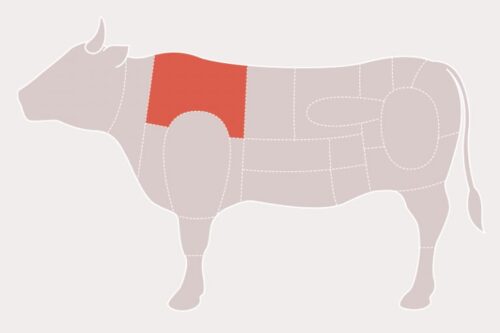
Chuck Roll is the meat extending from the neck to the back of the cow, specifically around ribs 1–5, located in front of the Rib Roin (Ribeye).
In the Japanese meat market, this cut is known as Kata Rosu (肩ロース) or the shoulder and neck loin.
As it is a muscle with a moderate level of movement, the red meat of the Chuck Roll has an intense flavor and high umami. At the same time, it is a part where fine and beautiful marbling (Sashi) can be found.
When heated, the sweetness of the fat merges with the flavor of the red meat, resulting in juicy, tender, and well-rounded beef.
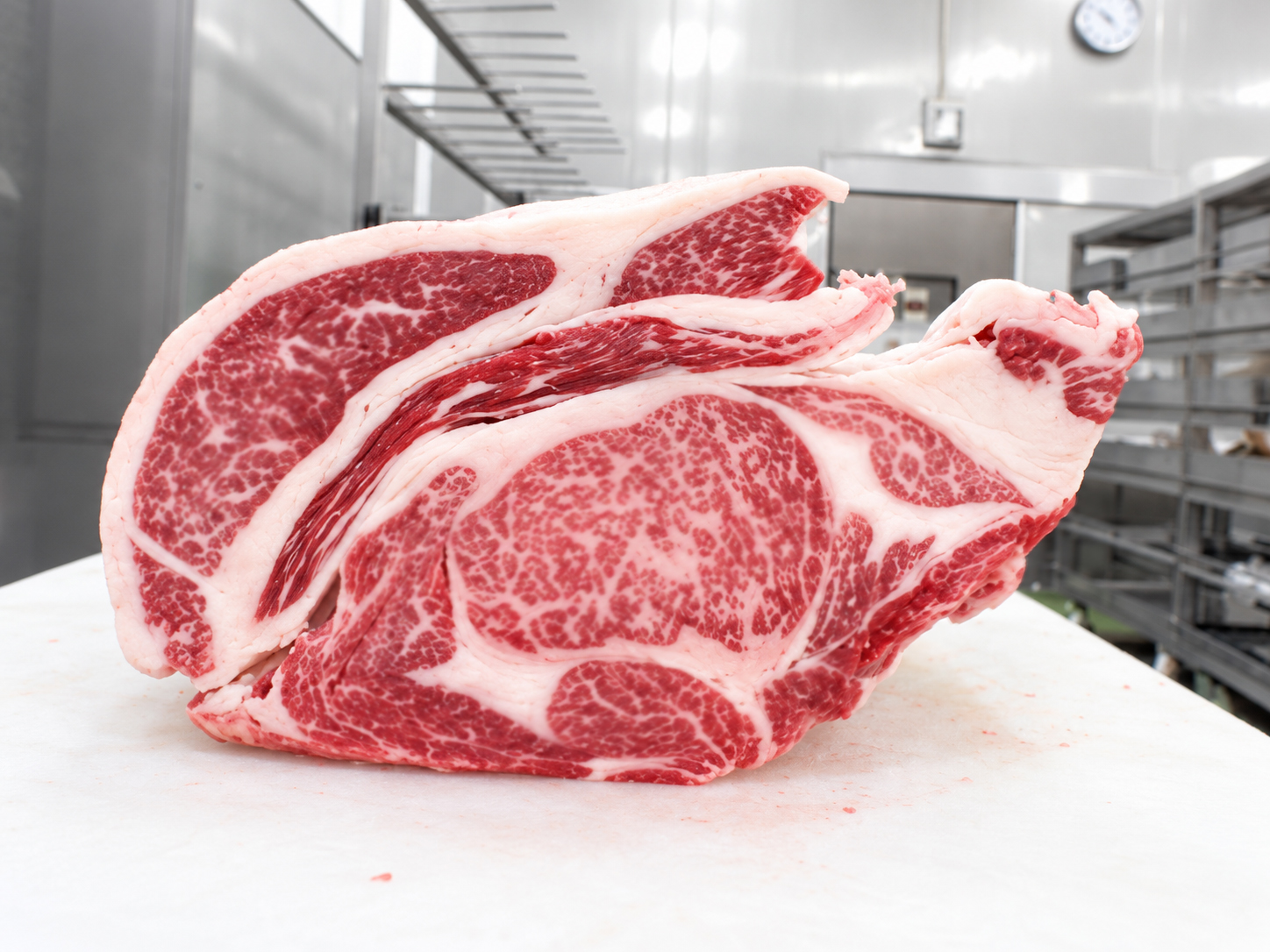
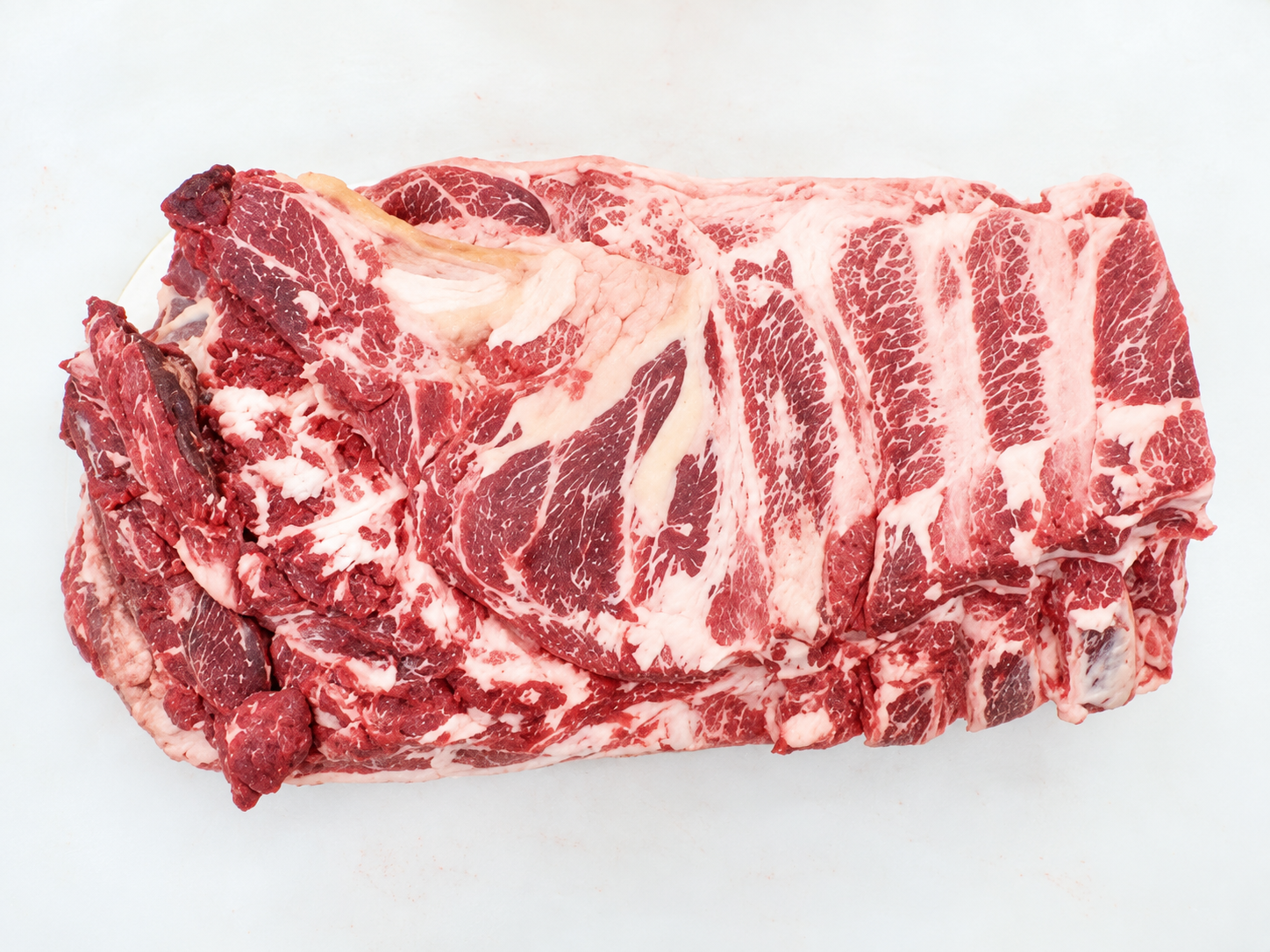
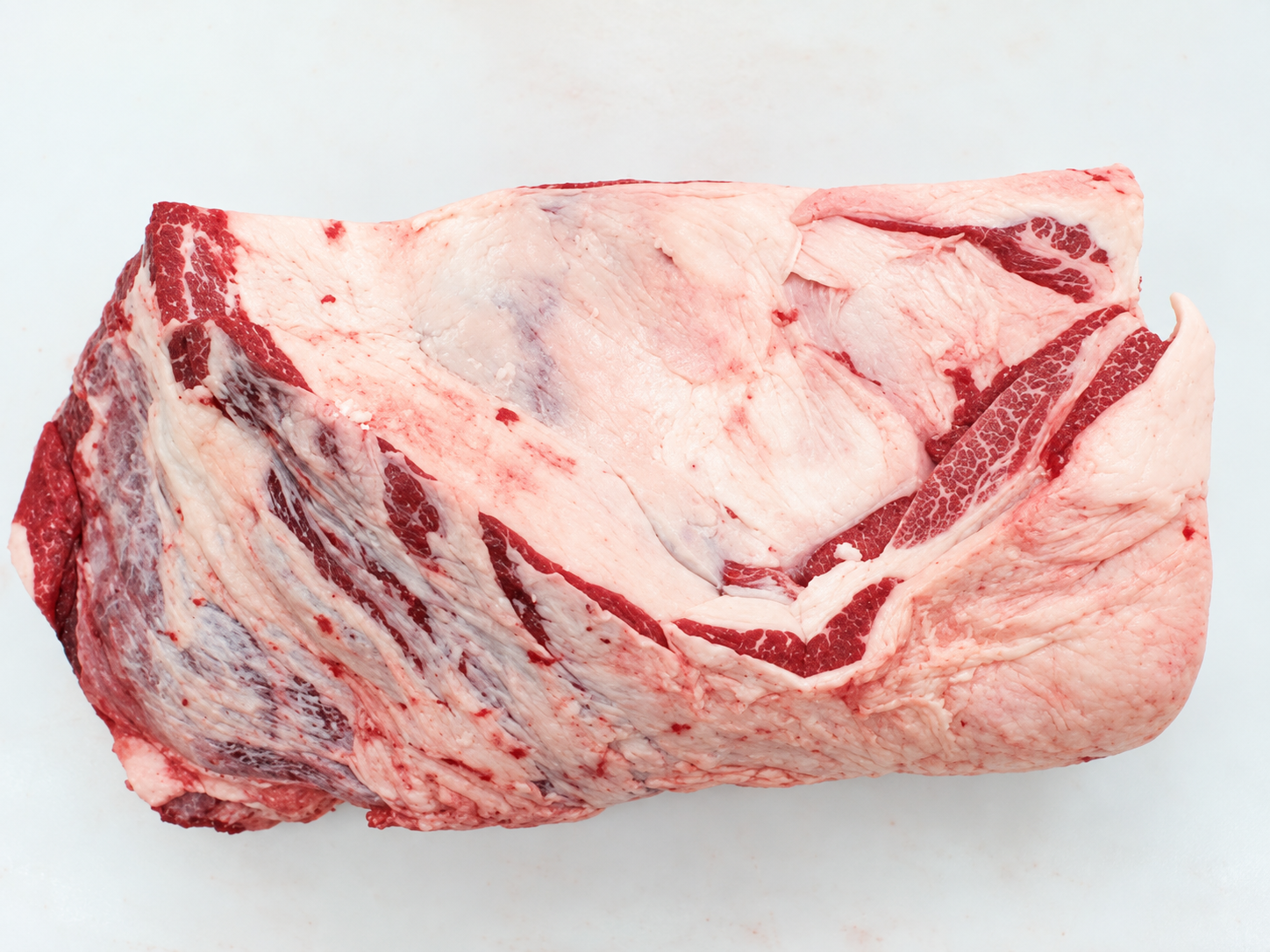
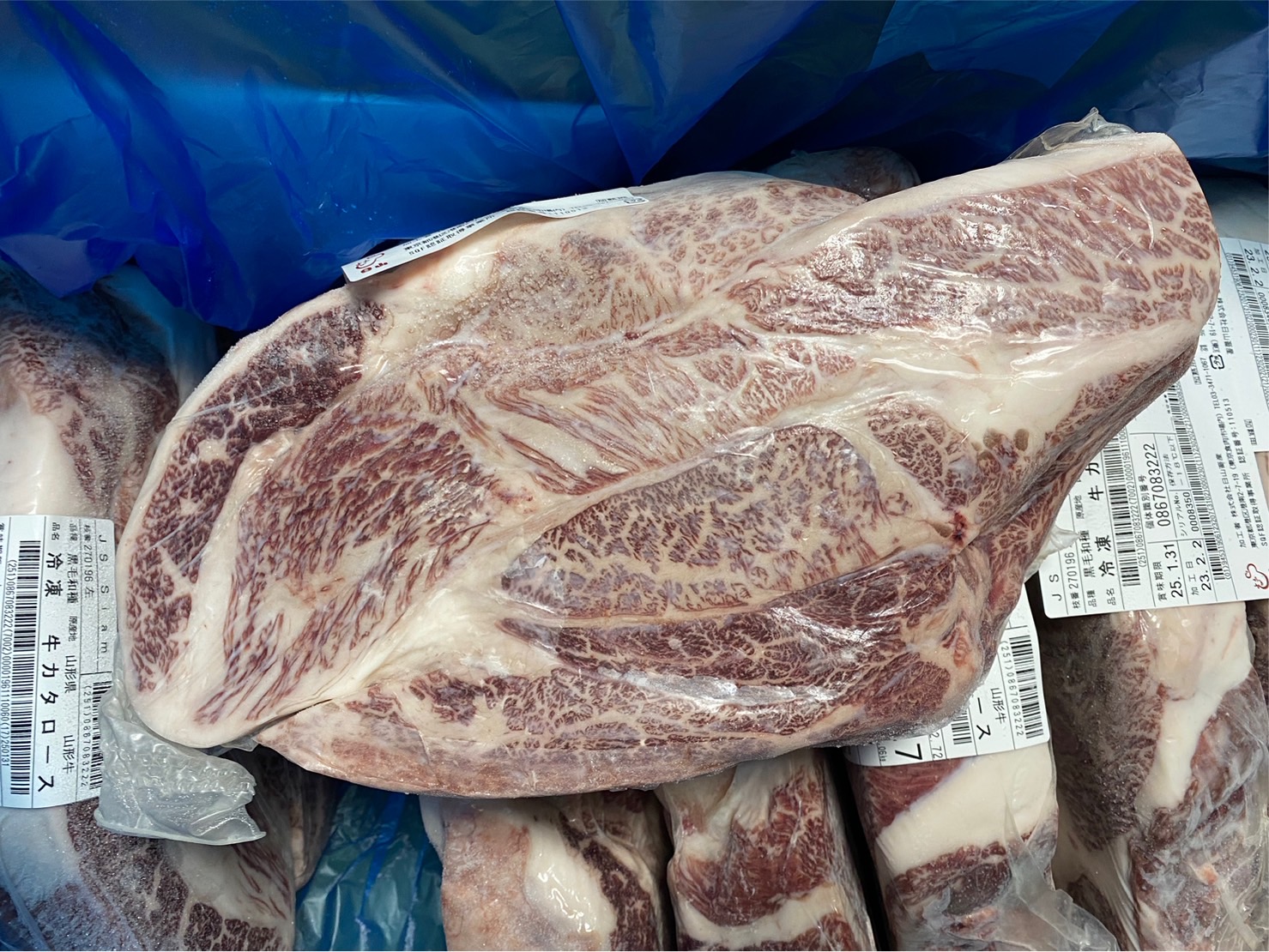
2. Components of the Chuck Roll
The Chuck Roll consists of several parts with different characteristics, textures, and fat content. It can be divided into 4 main parts, each suitable for different dishes.
Zabuton / Chuck Flap
This is the part with the most beautiful marbling in the Chuck Roll and is considered a high-quality, limited-quantity cut.
It has an extremely tender texture with fine fat, providing a melt-in-your-mouth sensation along with prominent sweetness and aroma.
Suitable for: Premium Yakiniku, Jo-Karubi, Jo-Rosu, thick-cut steaks, and seared beef sushi.
Chuck Eye / Chuck Eye Log
This is the core of the Chuck Roll that connects to the Rib Roin, offering a balance between red meat flavor and marbling.
It is a part where the meat's flavor can be clearly experienced, offering tenderness, juiciness, and intensity.
Suitable for: Large-slice Sukiyaki and Shabu-Shabu, Chuck Eye Steak, and Yakiniku.
Kaburi / Chuck Roll Cap
This is the outer meat that wraps around the Chuck Eye. It contains some tendons and has a firmer texture than other parts, but stands out for its intense meat flavor and juices.
Suitable for: Karubi or Rosu for Yakiniku (scoring the meat can increase tenderness), sliced meat for beef bowls, trimmings, and stir-fry dishes.
Neck
This is the meat in the neck area near the head. Because it is a heavily used muscle, it has relatively coarse fibers and is firmer than other parts.
However, this part is rich in collagen and intense red meat flavor, making it highly suitable for long-cooking dishes.
Suitable for: Ground meat for Hamburg steaks, stews, curries, and braised beef dishes.
Note: Our company sells the Chuck Roll excluding the Neck portion.
3. The Charm and Popularity of Chuck Roll
Chuck Roll is a cut that offers a great balance of flavor, tenderness, and price, making it a high-value option for restaurants and meat businesses.
Another highlight is the ability to divide the Chuck Roll into sub-cuts for various uses. From a single large piece, various products and menus can be developed, such as premium cuts like Zabuton, high-quality sliced Chuck Eye, and meat for Yakiniku or other dishes.
This allows restaurants to select each part appropriately, helping to manage meat yield, reduce waste, and control menu development costs more easily.
Chuck Roll is also a cut that can be used in many types of cuisine, from Sukiyaki, Shabu-Shabu, Yakiniku, and steaks to stews, making it an extremely versatile cut.
4. Recommended Cooking Methods and Dishes
1. Sukiyaki and Shabu-Shabu (Sukiyaki & Shabu-Shabu)
Thinly slicing the Chuck Roll helps bring out the intense red meat flavor and the sweetness of the marbling, providing a tender and juicy texture.
2. Yakiniku
The Zabuton and Chuck Eye portions are suitable for thick cuts or grilling pieces, allowing for the full experience of high-quality fat sweetness and the aroma of grilled meat.
3. Steak / Chuck Eye Steak
Selecting the core or Chuck Eye for thick-cut steaks is ideal for those who want a meat with a good firmness along with intense and multi-dimensional red meat flavor.
4. Stews (Stew / Curry)
Parts with a firm texture and collagen, when slow-cooked, will intensify in flavor while the collagen gradually melts, adding richness and depth to the dish.
FILLET (ひれ)
Warning: Trying to access array offset on false in /home/jssiam5/jssiam.co.th/public_html/wp-includes/media.php on line 812
Warning: Trying to access array offset on false in /home/jssiam5/jssiam.co.th/public_html/wp-includes/media.php on line 818
Fillet / Tenderloin (Wagyu Fillet / Tenderloin)
~ A premium cut hailed as the "Queen of Beef" for its exceptional tenderness and delicate red meat flavor ~
Product Information
Weight per head: approx. 10 kg
Weight per box: approx. 10 kg
Standard cut size
1. What part of the beef is the Fillet?
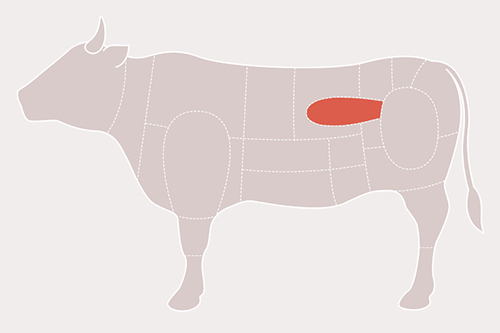
Fillet (Tenderloin) is the meat located on the inner side of the loin area. It is adjacent to the Sirloin and is considered one of the highest quality cuts.
The Fillet is located on the inner side of the spine, while the outer side is the Sirloin.
This cut is available in very small quantities, accounting for approximately 2% of the meat from a single cow, making it a rare and high-value part.
Since it is a muscle that is almost never used, it has very fine fibers and a high level of tenderness. At the same time, it is a red meat with relatively low fat, offering a clean, delicate flavor and a texture so soft it can be cut with ease.
1. What part of the beef is the Fillet?
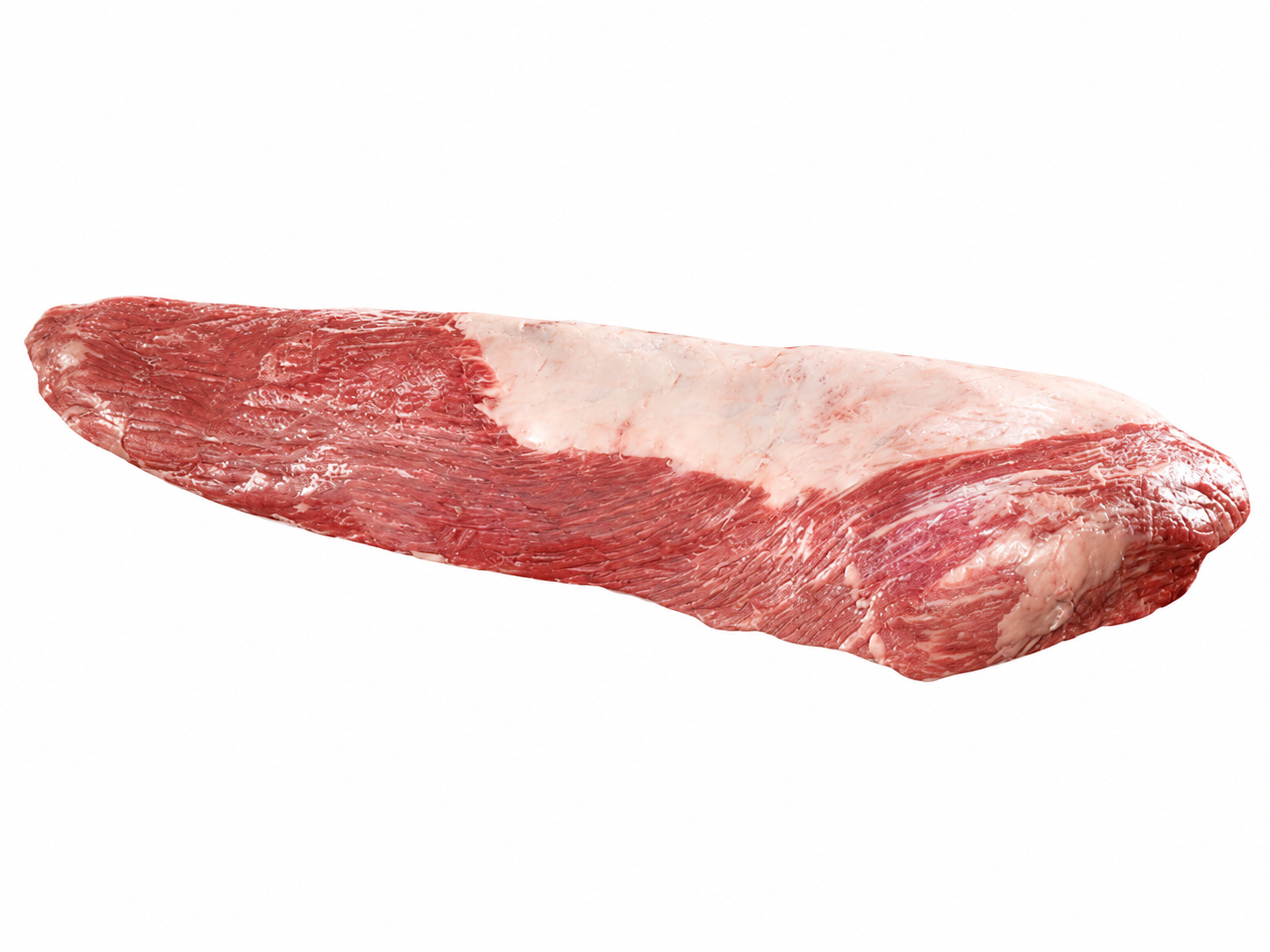
Fillet (Tenderloin) is the meat located on the inner side of the loin area. It is adjacent to the Sirloin and is considered one of the highest quality cuts.
The Fillet is located on the inner side of the spine, while the outer side is the Sirloin.
This cut is available in very small quantities, accounting for approximately 2% of the meat from a single cow, making it a rare and high-value part.
Since it is a muscle that is almost never used, it has very fine fibers and a high level of tenderness. At the same time, it is a red meat with relatively low fat, offering a clean, delicate flavor and a texture so soft it can be cut with ease.
2. The Charm and Popularity of Fillet
Fillet is one of the premium cuts recognized worldwide. Using it in a menu or product line clearly enhances the image of luxury and quality.
With its low fat content, the meat offers a light flavor that is not greasy, yet still maintains the intensity and umami of red meat. This makes it ideal for those who prefer lean meat as well as those who want an exceptionally soft texture.
Another highlight is the consistent quality of the meat, which does not easily become tough when heated properly. This helps restaurants control menu quality easily and achieve consistent results in cooking.
Fillet is therefore suitable for special meals, serving in premium restaurants, and as a gift for important occasions.
However, Fillet is a delicate meat that can easily discolor from exposure to air and light. It should be stored and handled under appropriate temperature and hygiene conditions.
3. Recommended Cooking Methods and Dishes
1. Steak
One of the most popular ways to cook Fillet. Even when cut into thick pieces, the meat remains very tender. It is ideal for those who want to fully experience the quality and texture of the Fillet.
2. Barbecue / Charcoal Grill
Grilling the exterior with charcoal to create a fragrant sear adds a dimension of aroma and clearly brings out the red meat flavor while maintaining the juiciness inside.
3. Roast Beef
Slow-cooking at a low temperature preserves the juiciness and tenderness of the meat, resulting in roast beef with a clean and delicate red meat flavor.
4. Fillet Katsu / Beef Katsu (Fillet Cutlet / Beef Cutlet)
When the Fillet is breaded and fried until the outside is crispy, you get a contrast in texture between the crispy breading and the soft, juicy meat inside. This is suitable for premium menus that want to clearly showcase the meat's quality.
D-RUMP (ランイチ/Ran Ichi)
D-Rump
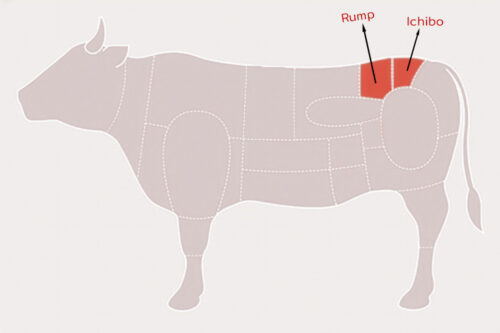
In English, this cut of meat is called D-Rump, while in Japanese it is called Ranichi (ランイチ), which can be divided into two main parts: Rump (ランプ) and Ichibo (イチボ), with each part having distinct characteristics and highlights.
Product Information
Weight per head: approx. 24 kg
Weight per box: approx. 24 kg
Size: Standard Cut / 3P Cut
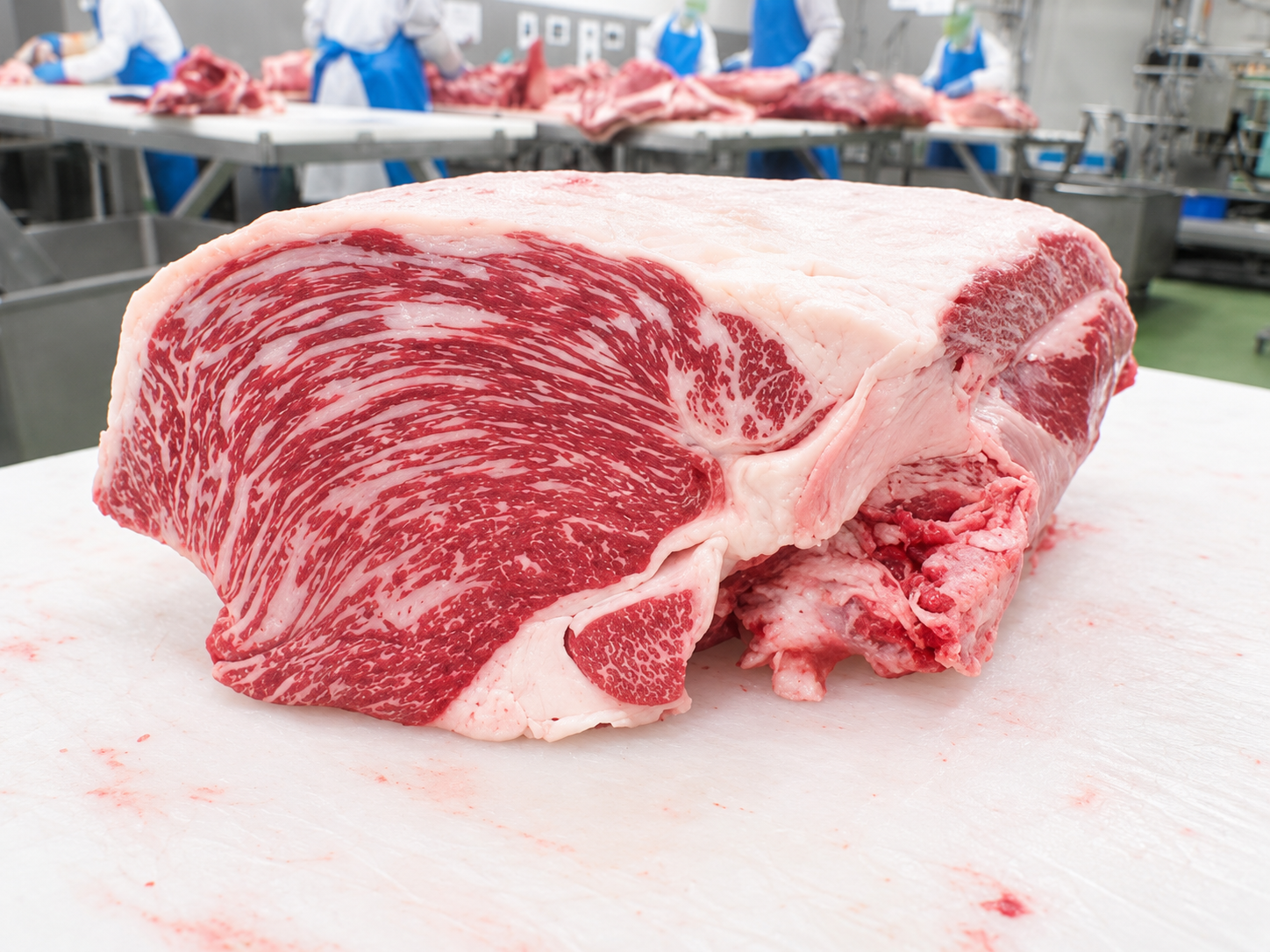
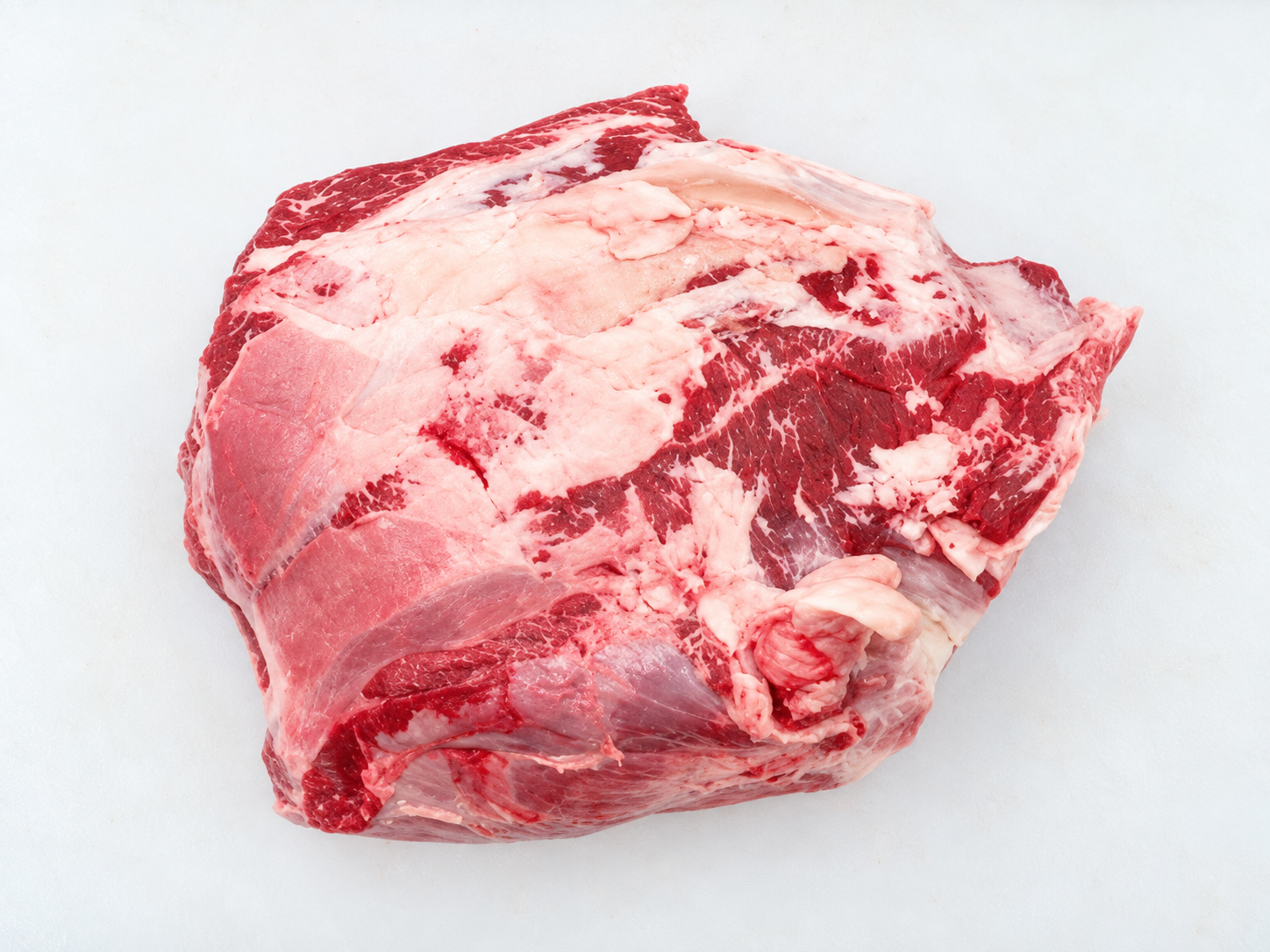
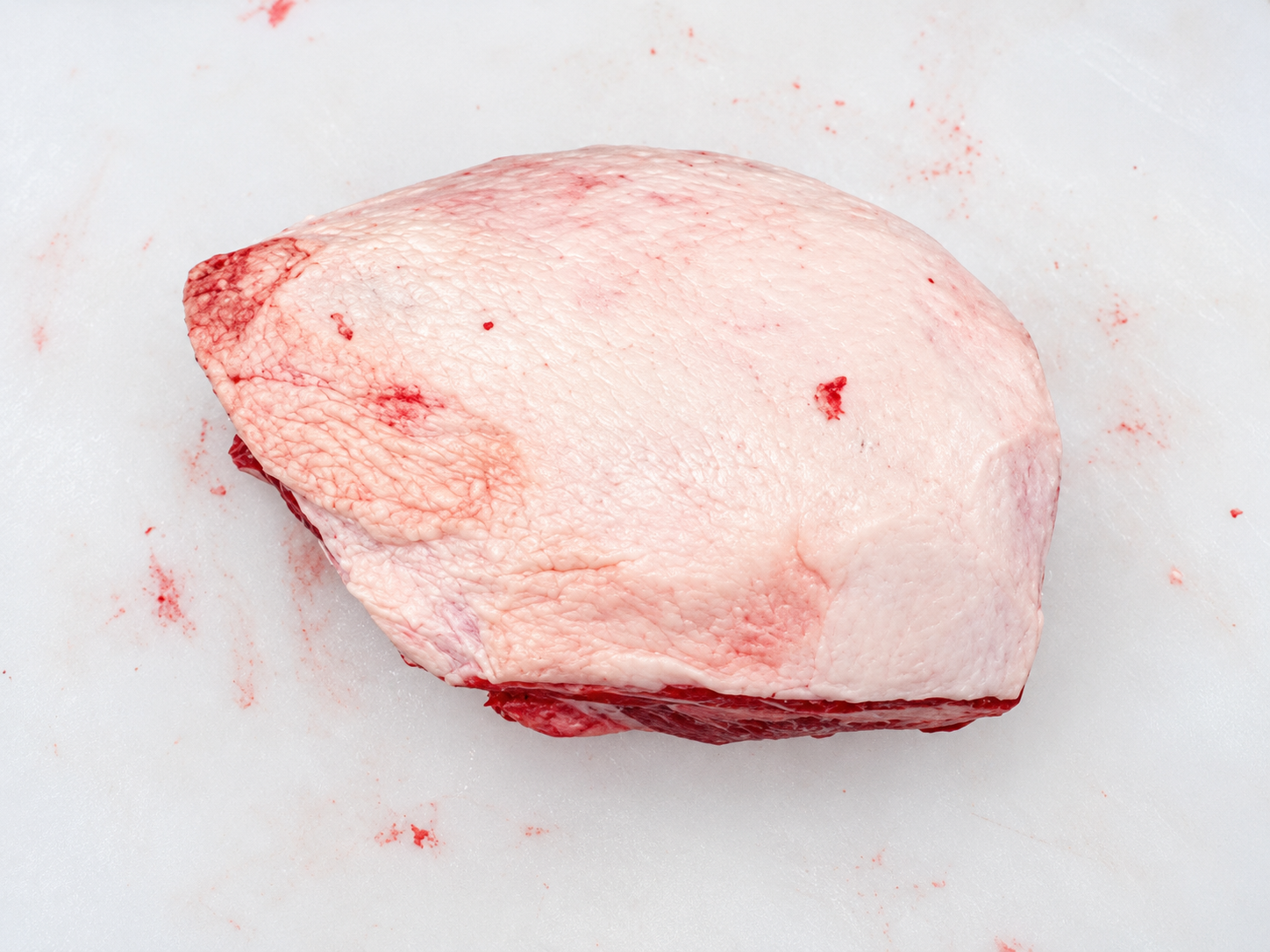
A) Rump
1. What part of the beef is the Rump?
Rump is the meat extending from the loin to the hip of the cow, located next to the Sirloin.
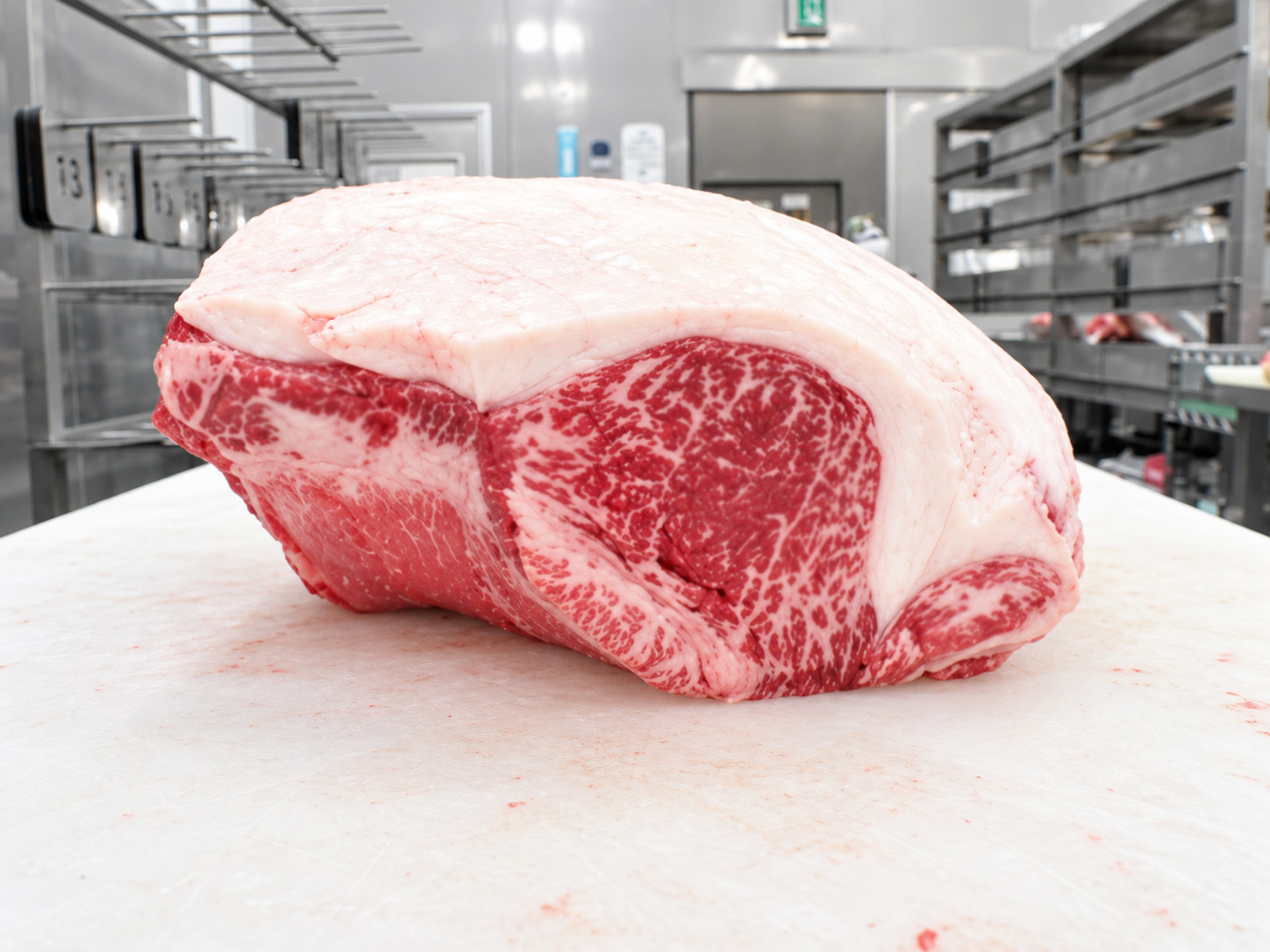
Since it is an area with limited movement, even though it is red meat, it has a tender texture, fine fibers, and is easy to eat.
For Wagyu Rump, the highlight is that it has relatively little excess fat, allowing for a clear experience of the natural flavor and aroma of the beef. It is considered a high-quality red meat that offers a well-rounded flavor without being greasy.
2. The Charm and Popularity of Rump
Light flavor, easy to eat
Compared to Sirloin or Karubi, Rump has less fat, so it is not too heavy or greasy. It is suitable for consumers of all ages.Intense red meat flavor
The more you chew, the more you can clearly experience the juices and the flavor of the beef, providing a rich and satisfying sensation despite not being a high-fat cut.High protein and relatively low fat
Rump meat is not very fatty and is a good source of protein and iron, making it a popular choice for those who want lean meat.
3. Recommended Cooking Methods and Dishes
Since Rump meat can become tough if overcooked, it is best suited for cooking to a level of Rare to Medium Rare.
Thick-Cut Rump Steak
We recommend letting the meat rest until it reaches room temperature before grilling. Then, sear the surface with high heat and let the meat rest in aluminum foil to allow the heat to gradually distribute inward, which helps keep the meat tender and juicy.
Roast Beef
Slow-cooking at a low temperature helps maintain the fine fibers, natural beautiful red color, and juicy texture of the Rump.
1. What part of the beef is the Tomobara?
Quickly searing only the exterior and serving it with ponzu or various side dishes provides a firm yet tender texture along with a light and refreshing red meat flavor.
B) Ichibo
1. What part of the beef is the Ichibo?
Ichibo is the meat at the tip of the hip. Only a small amount can be harvested from a single cow, making it a rare cut.
The name Ichibo comes from the term H-bone, referring to the shape of the hip bone, with the pronunciation evolving into the name used in Japanese.
Although the hip is an area with significant movement, Wagyu Ichibo often features beautiful marbling or Sashi, providing both the intense flavor of red meat and the sweet richness of Wagyu fat in one piece.
2. The Charm and Popularity of Ichibo
Balance between lean meat and marbling
You can simultaneously experience the distinct flavor of lean meat and the rich aroma of high-quality Wagyu fat.Juicy and deep flavor
The fat in Ichibo provides an appropriate level of intensity. When chewed, you can experience the juices, the aroma from grilling, and the sweetness of the fat gradually spreading in the mouth.Exclusivity from rarity
Due to the limited quantity available per cow, it is popular for special menus in restaurants and for important occasions.
3. Recommended Cooking Methods and Dishes
To best bring out the aroma of the fat on the surface, Ichibo is suitable for cooking to a level of Medium Rare to Medium.
Thick-Cut Ichibo Steak
Since it is a part with a distinct fat flavor, it pairs well with simple seasonings such as wasabi shoyu or rock salt to enhance the sweetness of the fat and the flavor of the red meat without overpowering the natural taste.
Yakiniku / Seared Beef (Yakiniku / Aburi)
It can be cut both thin and thick. Grilling the exterior to create a fragrant sear helps clearly extract the aroma of the fat while providing a juicy texture.
Churrasco / Roast
When the whole piece is slow-grilled until the exterior has a beautiful color and aroma, you get meat that is slightly crispy and fragrant on the outside while remaining soft and juicy on the inside.
TOP ROUND (うちもも/Uchimomo)
Uchimomo (Inside Round)
~ Low-fat red meat with a distinct flavor, ideal for those who want to experience Wagyu without it being too heavy ~
Product Information
Weight per head: approx. 24 kg
Weight per box: approx. 24 kg
Size: Standard Cut / 3P Cut
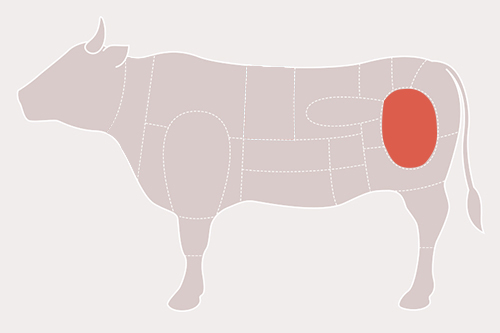
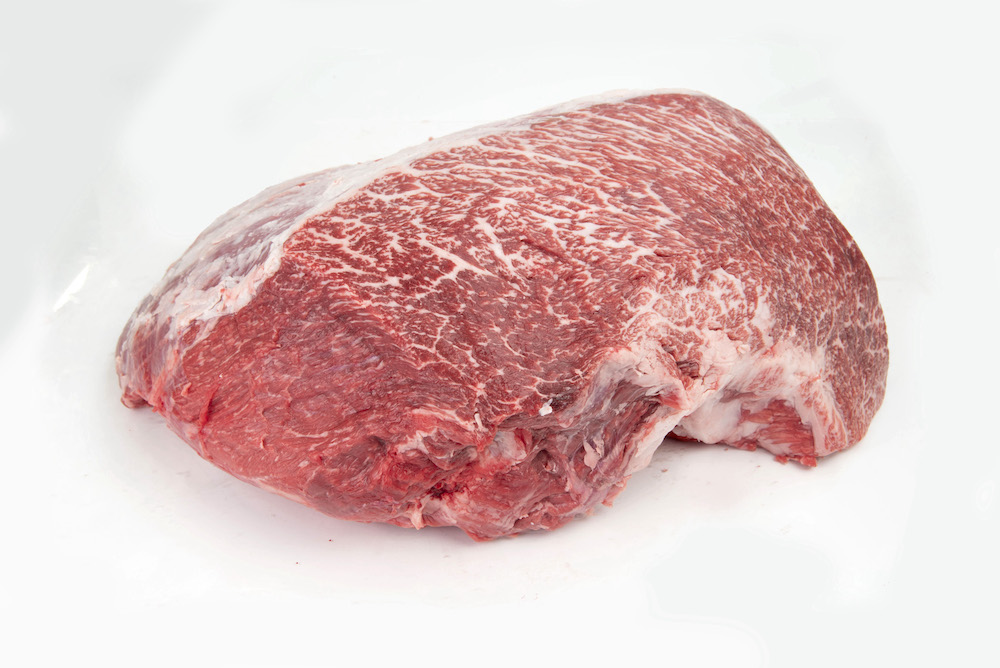
1. What part of the beef is the Uchimomo?
Uchimomo (Inside Round) is the meat on the inner side of the hind leg or the upper inner thigh of the cow.
This part is one of the relatively low-fat cuts. Even in Wagyu, it has less marbling or Sashi compared to parts like Sirloin or Rib Roin, making it stand out for its distinct red meat characteristics.
Uchimomo is a large muscle with relatively uniform fibers, allowing for a clear experience of the red meat flavor and beef umami.
2. The Charm and Popularity of Uchimomo
Low fat and high protein
This cut has relatively little fat, making it suitable for those who want to eat red meat without much richness.Clean flavor, not greasy
With its low fat content, the overall flavor is light and easy to eat. It can be consumed in large quantities without feeling too heavy.Value and easy access to Wagyu flavor
Compared to premium cuts like Sirloin or Fillet, Uchimomo is usually at a more accessible price point, making it another great option for those who want to experience Wagyu in the form of red meat.
3. Recommended Cooking Methods and Dishes
Since Uchimomo has little fat, it can easily lose its juiciness if overcooked. The best methods are slow-cooking at a low temperature or slicing thin and cooking for a short time.
Wagyu Roast Beef
One of the most suitable dishes for Uchimomo because it helps the red color of the meat look beautiful, and low-temperature cooking preserves the juiciness, keeping the texture soft and not dry.
Beef Katsu / Rare Katsu
Fry the meat in high-temperature oil for a short duration so the exterior is crispy while the interior remains soft and juicy. This provides a perfect contrast between the crispy breading and the tender red meat.
Sukiyaki and Shabu-Shabu (Sukiyaki & Shabu-Shabu)
When Uchimomo is thinly sliced and dipped in broth for a short time, it maintains its tenderness while allowing the broth's flavor to blend perfectly with the intensity of the red meat.
SHOULDER CLOD (うで/Ude)
Ude (Shoulder)
~ A shoulder cut distinguished by its intense flavor, varied textures, and the richness of fat and collagen ~
Product Information
Weight per head: approx. 24 kg
Weight per box: approx. 24 kg
Size: Standard Cut / 3P Cut
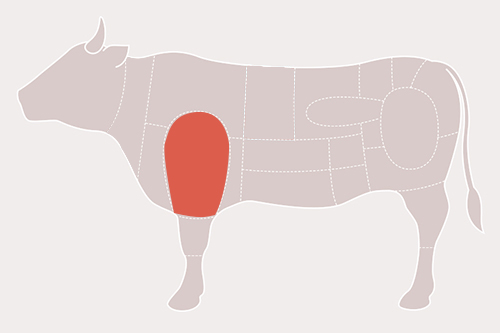
1. What part of the beef is the Ude?
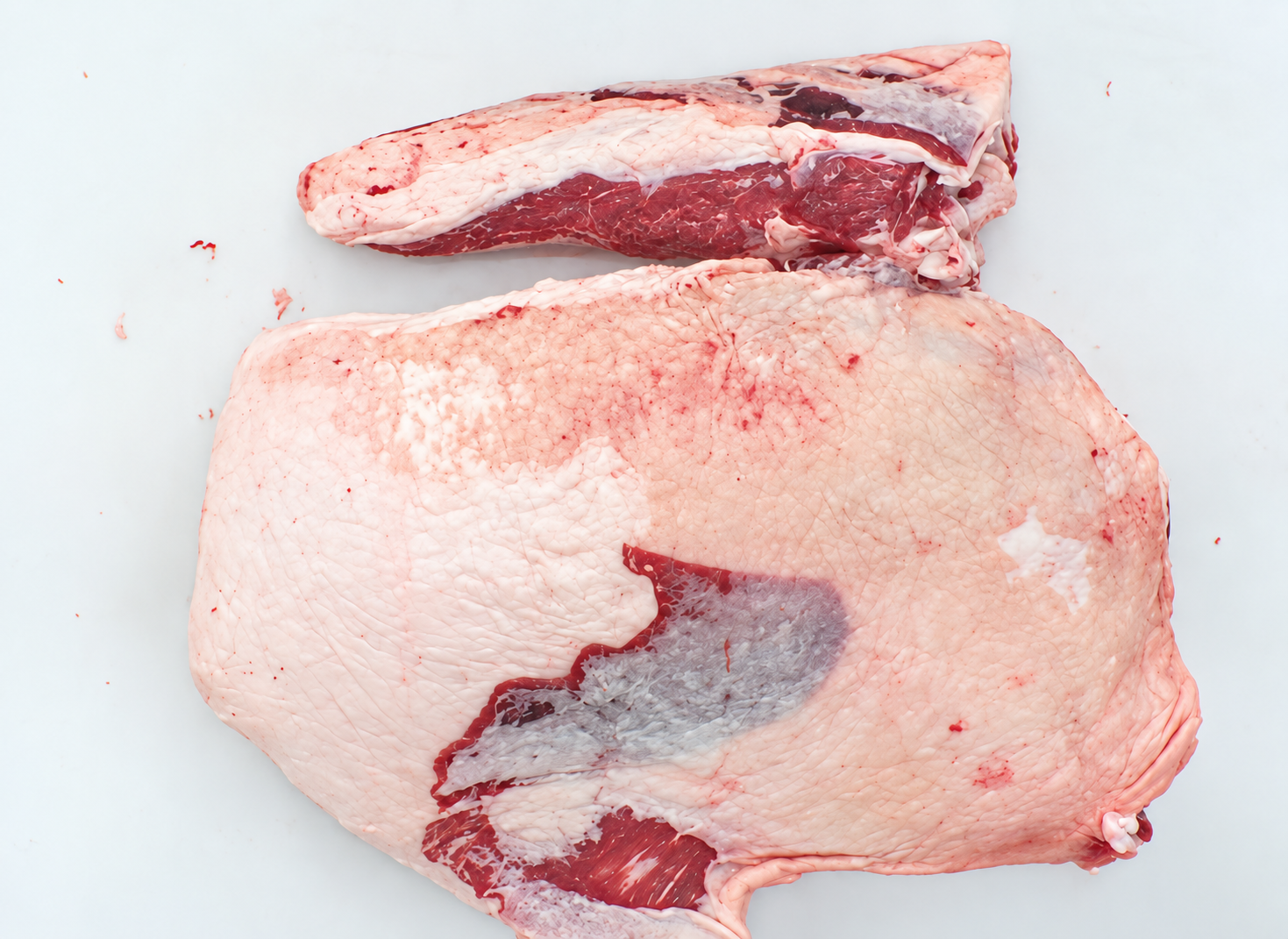
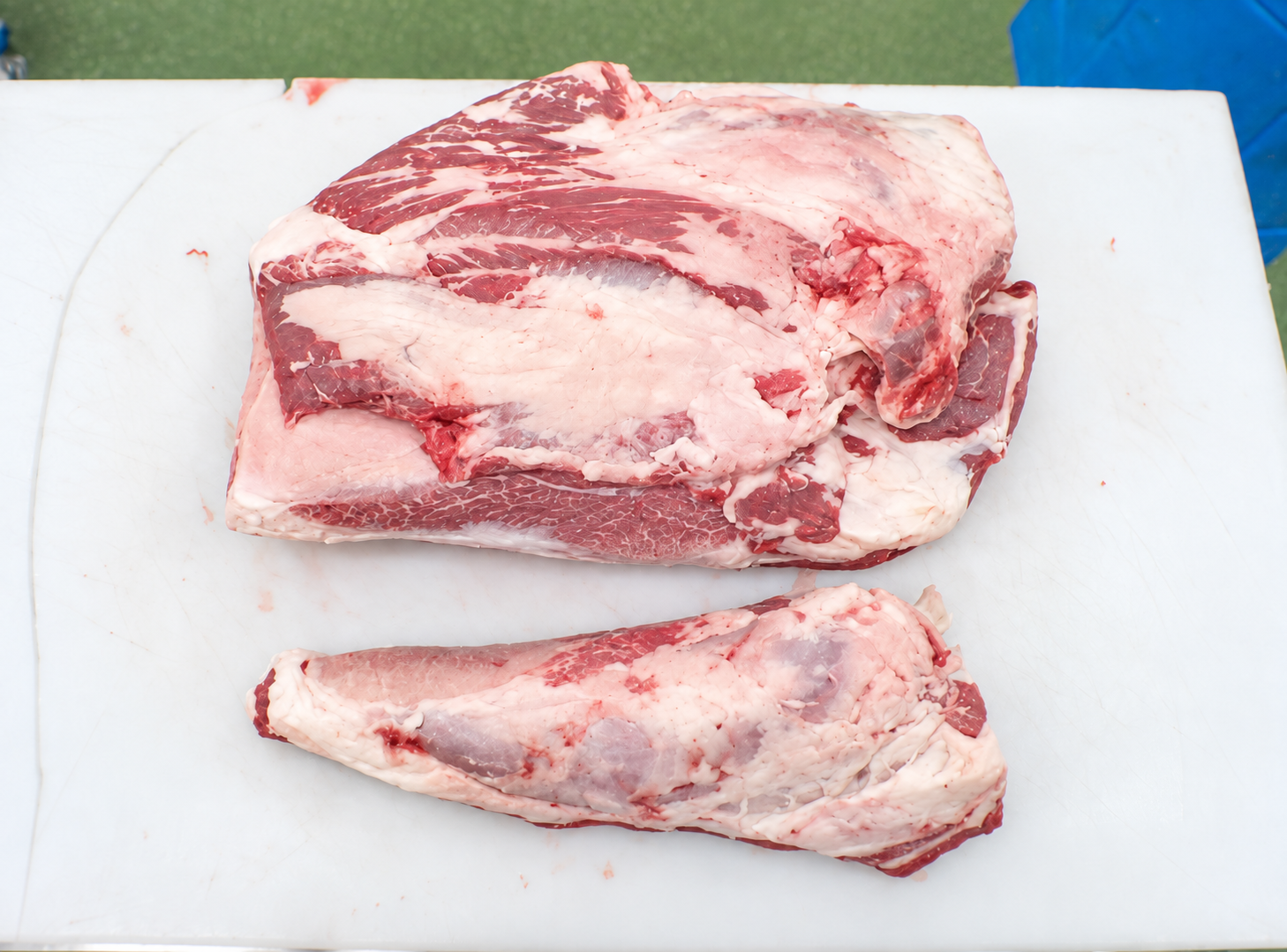
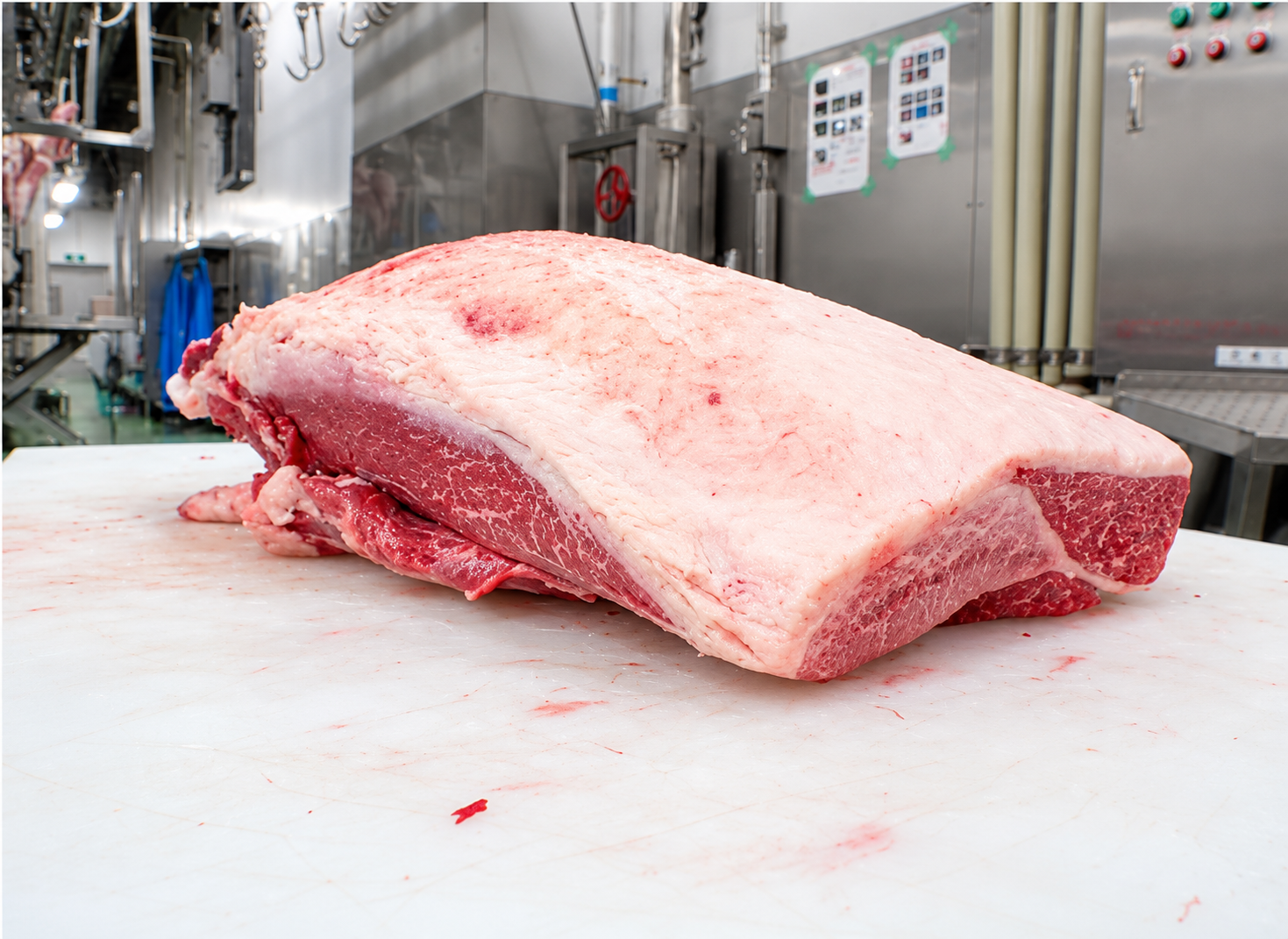
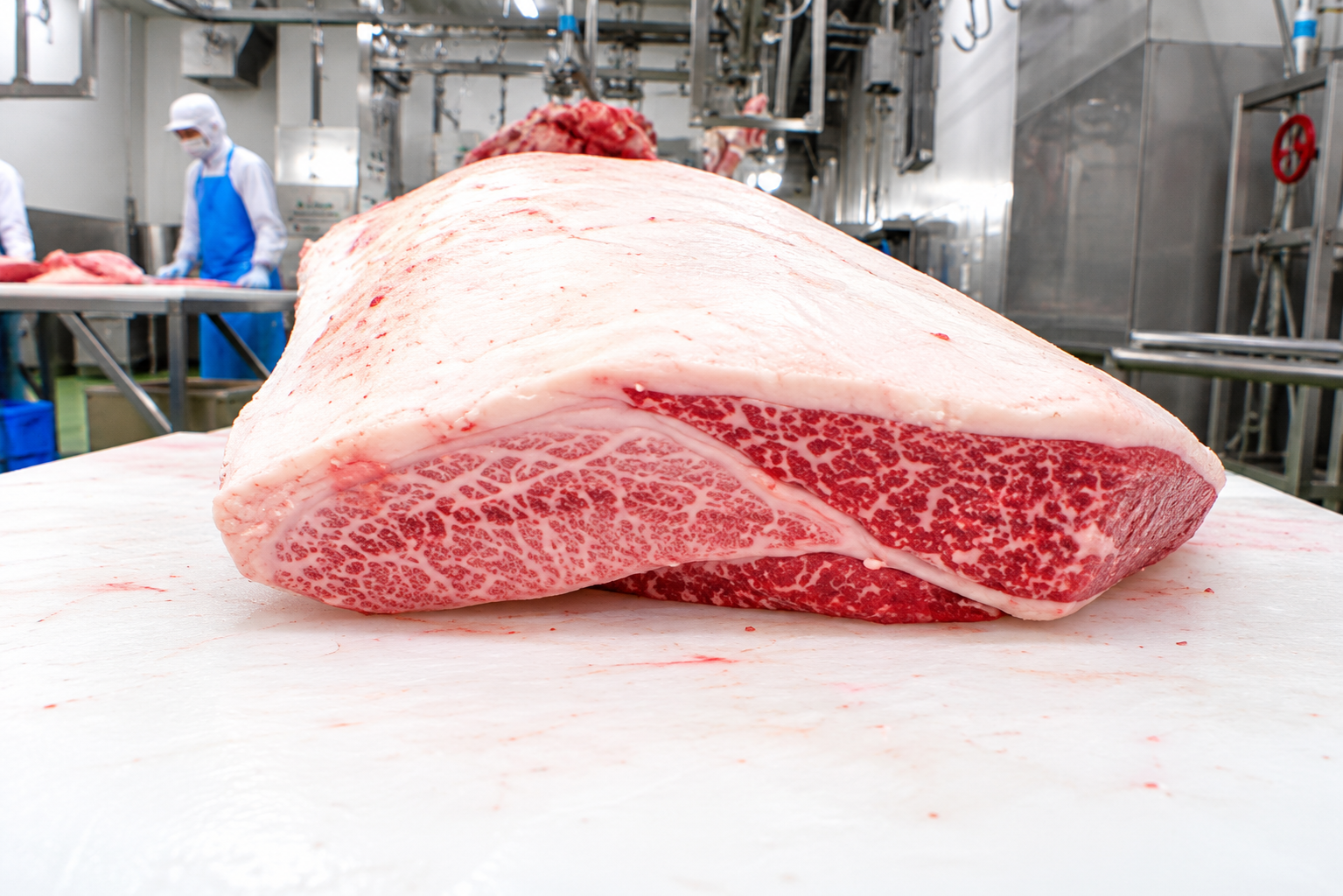
Ude is the meat extending from the top of the front leg to the shoulder area. It consists of several parts such as Kata, Misuji, and Uwa Misuji.
Since it is an area with significant movement, it has a firm texture and an intense red meat flavor.
For Wagyu Ude, although it is a heavily used muscle, marbling or Sashi can still be found within the meat, along with connective tissue and collagen interspersed in each part. This provides both red meat intensity and a variety of textures; the more you chew, the more clearly you can taste the meat.
2. The Charm and Popularity of Ude
Intense and multi-dimensional meat flavor
Ude has a distinct red meat flavor. When chewed, you gradually experience the natural aroma and umami of the beef.Variety of red meat and marbling patterns
The Ude consists of several sub-cuts, ranging from intense red meat to parts like Misuji, which is famous for its beautiful marbling and softer texture.Texture changes based on cooking method
Due to the presence of connective tissue and collagen, when stewed for a long time, the collagen gradually turns into gelatin, making the meat tender and adding richness to the broth.
3. Recommended Cooking Methods and Dishes
Ude is suitable for both thin slicing for short cooking times and slow-cooking large pieces for an extended period.
Sukiyaki and Shabu-Shabu (Sukiyaki & Shabu-Shabu)
When Ude is thinly sliced, the intense red meat flavor remains prominent even when eaten with sukiyaki sauce or broth, allowing for a clear taste of Wagyu.
Stewed Dishes (Beef Stew / Braised Beef)
Due to the collagen in the meat, when stewed for a long time, the meat gradually becomes tender enough to pull apart easily, while the flavor and gelatin from the meat melt into the broth, creating a richer and more well-rounded taste.
Thinly Sliced Yakiniku / Yaki-Shabu
Quickly grill thinly sliced meat just until the exterior is cooked and fragrant. Serving it with ponzu or grated daikon helps cut through the meat's intensity and makes it more refreshing.
SHORT PLATE BRISKET (バラ/BARA)
Tomobara (Short Plate)
~ "Karubi," the popular grilled meat, distinguished by the sweetness of its fat, intensity, and juiciness ~
Product Information
Weight per head: approx. 70 kg
Weight per box: approx. 35 kg x 2-4 boxes
Size: Standard Cut / 10P Cut
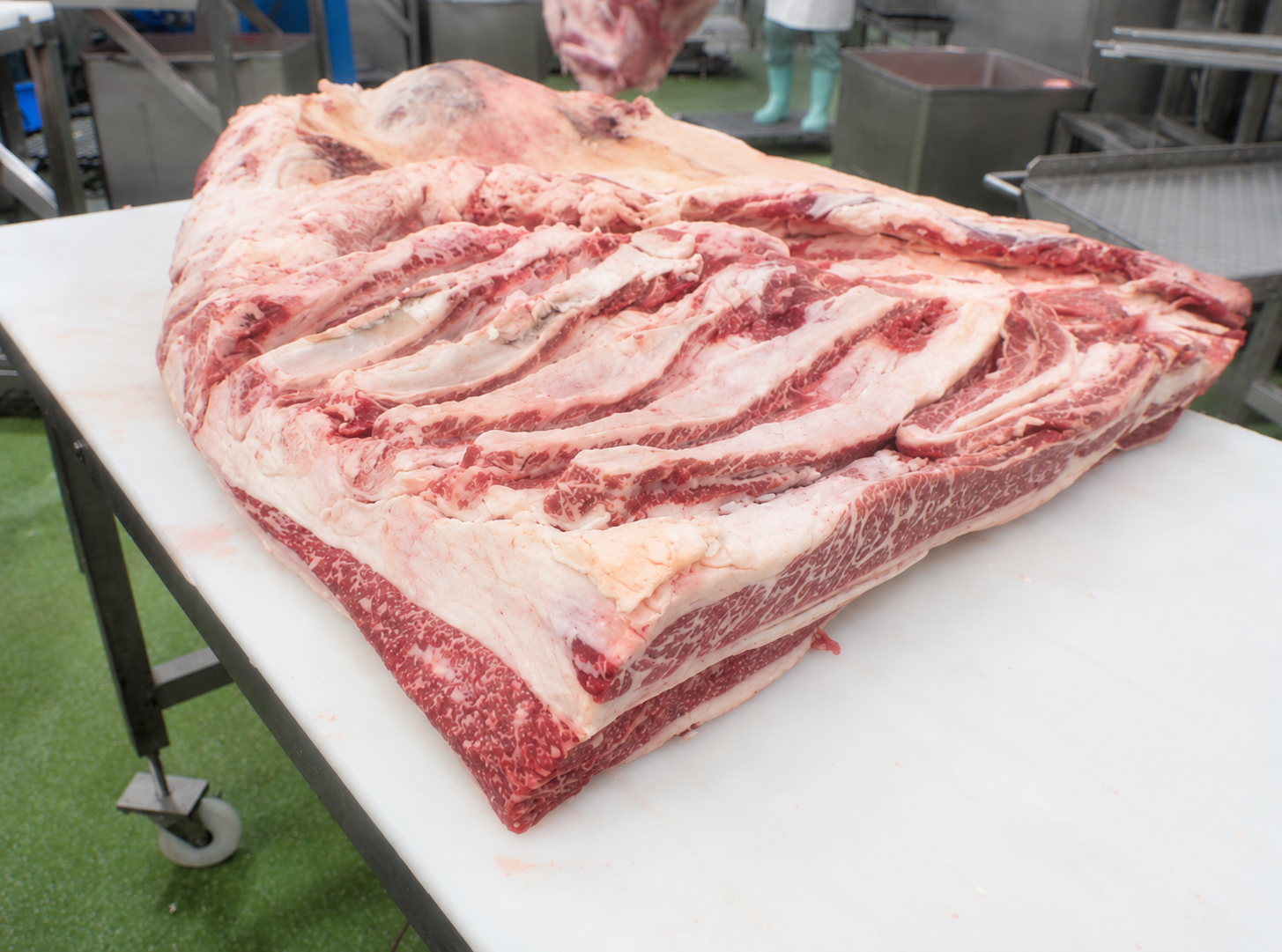
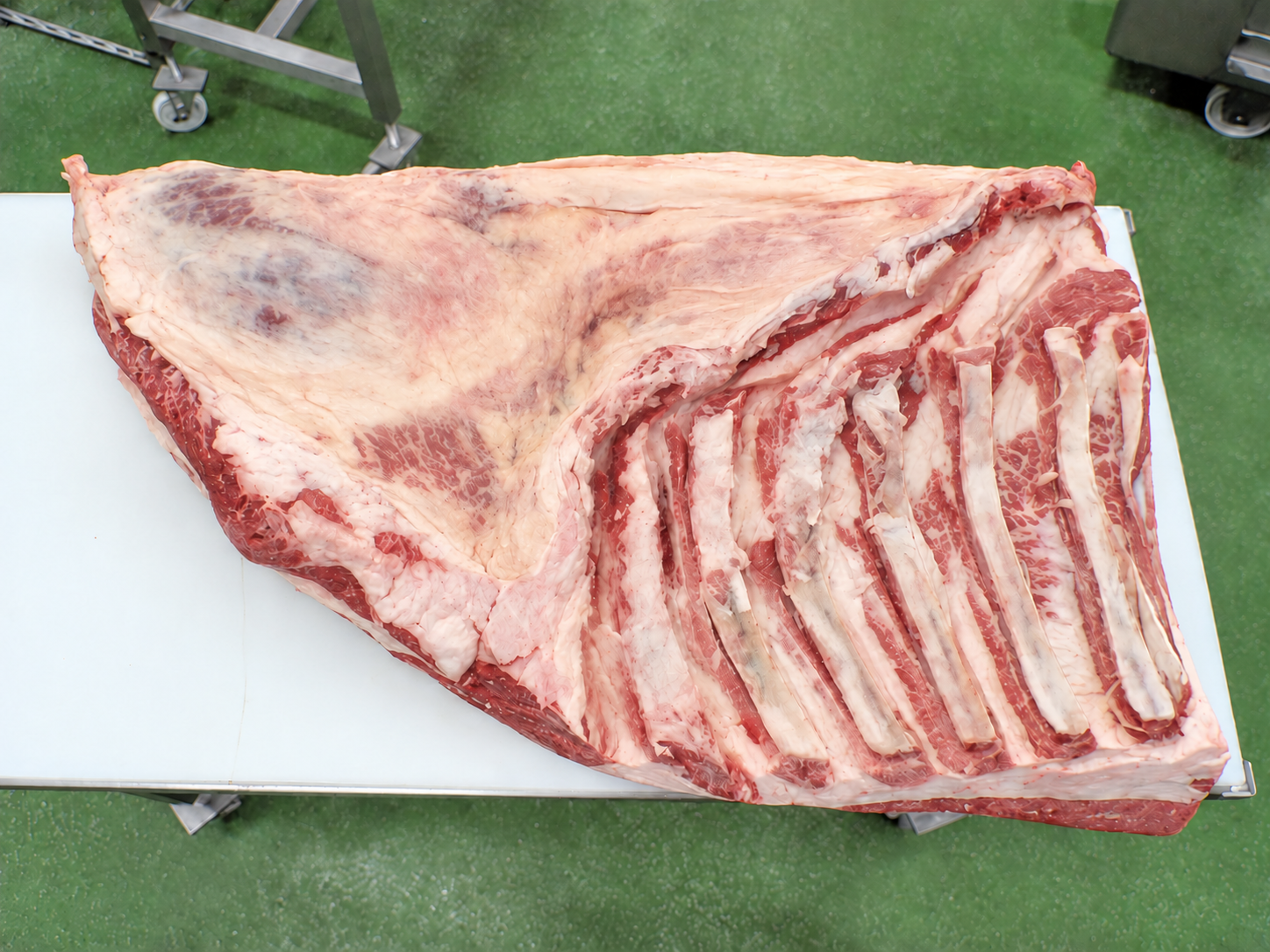
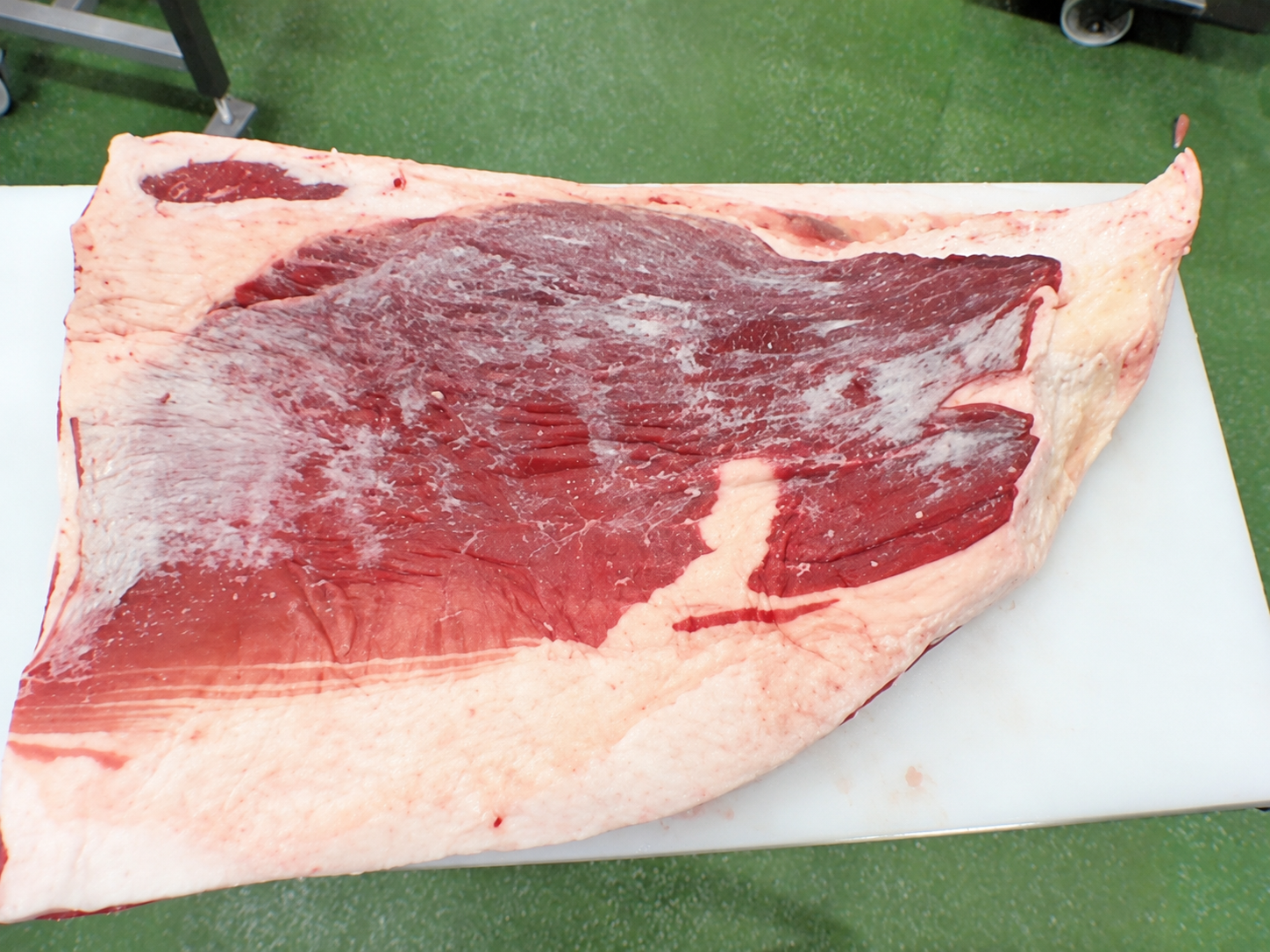
1. Which part of the beef is Tomobara?
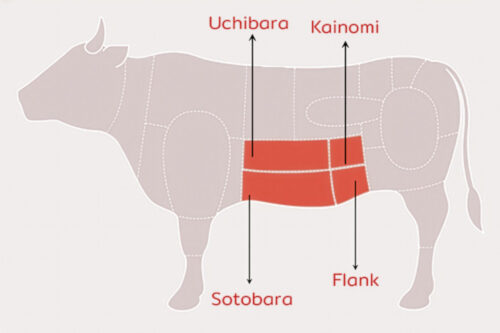
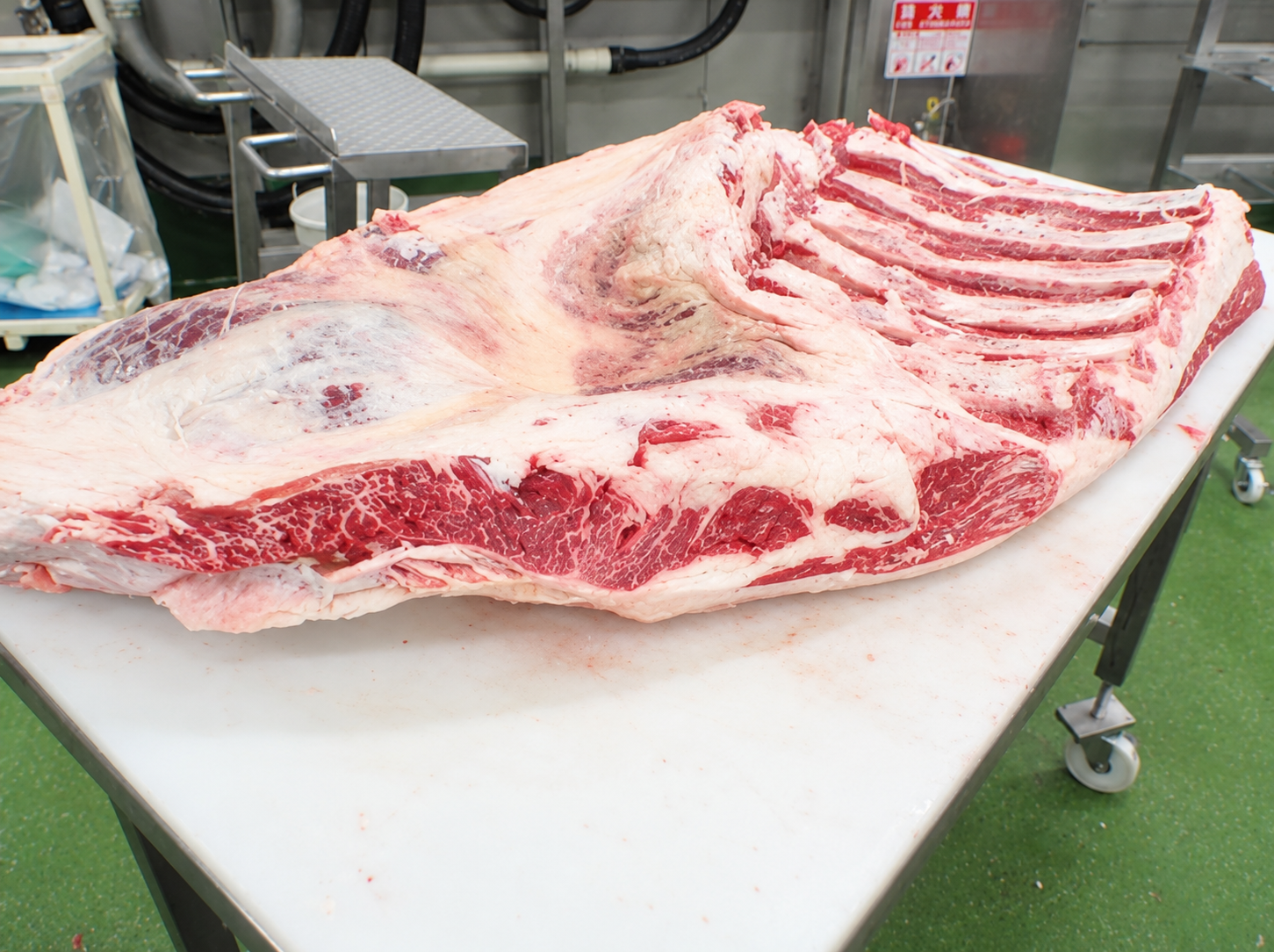
Tomobara (Short Plate) is the meat on the lower belly area of the cow's ribs, located under the rib cage.
Bara meat can be divided into main parts: Nakabara, which is closer to the back, and Sotobara, which is closer to the outer belly area.
Tomobara is one of the parts where the unique marbling (Sashi) and the sweetness of Wagyu fat can be most clearly experienced. The red meat and fat are beautifully layered.
Nakabara has a balance between red meat and fat, providing a soft and well-rounded flavor.
Sotobara is closer to the belly and has prominent marbling. When chewed, you can experience the sweetness of the fat and the succulent juices.
2. The Charm and Popularity of Tomobara
Tomobara is extremely popular in Yakiniku restaurants, often used for Karubi or Jo-Karubi, which are grilled meat dishes well-known to customers.
Furthermore, trimming Nakabara and Sotobara can yield unique sub-cuts like Kainomi and Sasami, as well as other parts that can be developed into various premium menus.
Another highlight is the high fat content, which maintains juiciness well when heated. It is suitable for grilling, thin slicing for hot pots, or stewing.
3. Recommended Cooking Methods and Dishes
Karubi Yakiniku / Grilled Meat
It can be cut thick or scored before grilling to create a fragrant exterior. Serve with sauces or side dishes to enhance the sweetness of the fat and the intense meat flavor.
Shabu-Shabu / Hot Pot / Sukiyaki
When Tomobara is thinly sliced and dipped in hot broth, some of the fat melts away, giving the meat a soft, delicate texture along with a rich and well-rounded flavor.
Specialty Cut Steak
Certain parts of the Tomobara, such as Kainomi from the Nakabara area or parts with a balance of red meat and fat, can be cut into thick steaks.
This provides a soft texture with a balanced flavor of red meat and fat sweetness.
Beef Bowl / Braised Beef
When slow-cooked, the fat and tissues gradually soften, while the flavor of the meat and fat melts into the sauce or broth, resulting in a rich and well-rounded taste.
GOOSENECK ROUND
Sotomomo (Outside Round)
~ Intense red meat flavor, satisfying chew, light and low in fat ~
Product Information
Weight per head: approx. 24 kg
Weight per box: approx. 24 kg
Size: Standard Cut
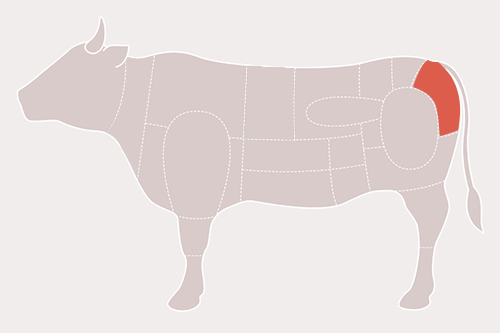
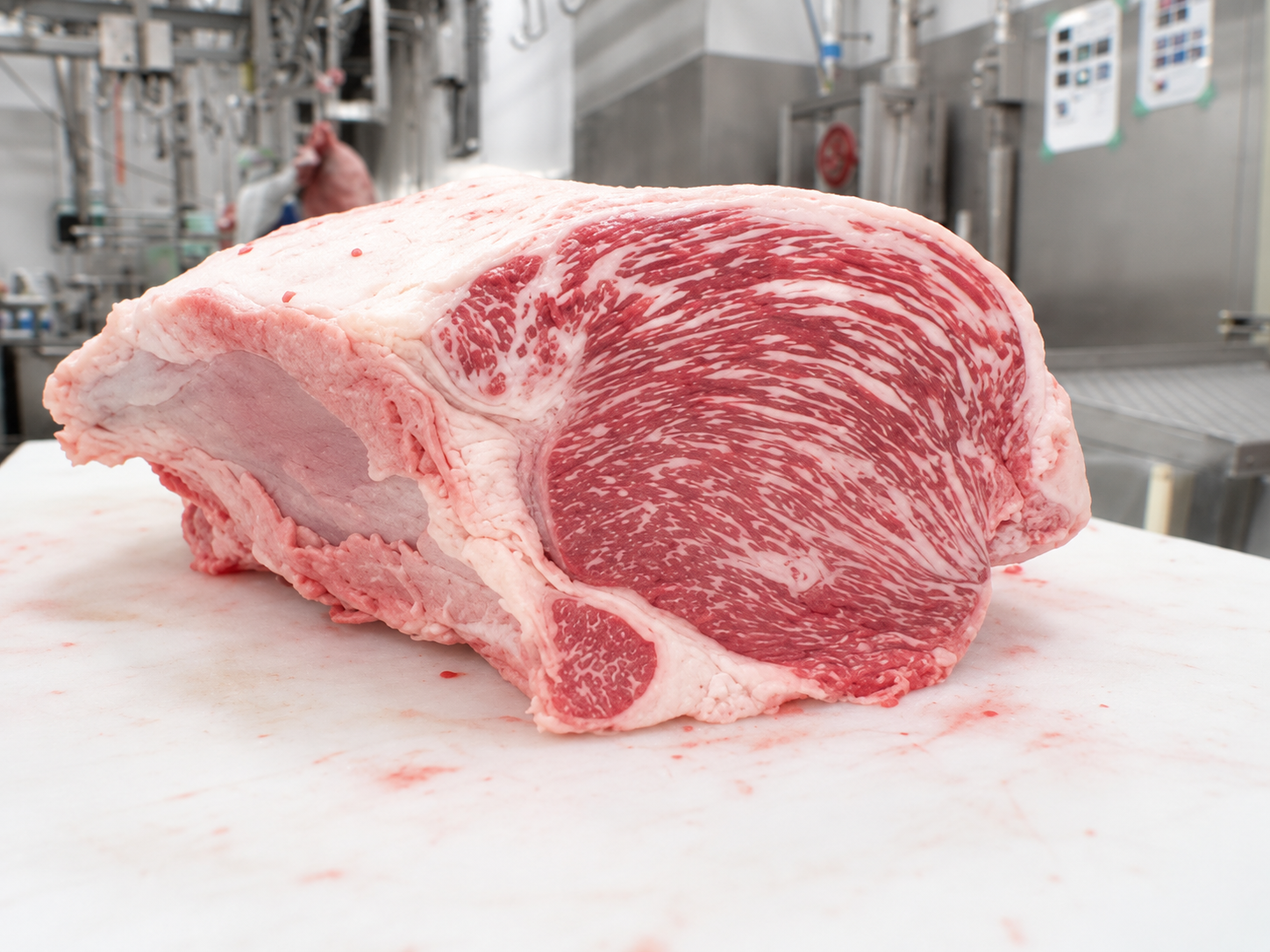
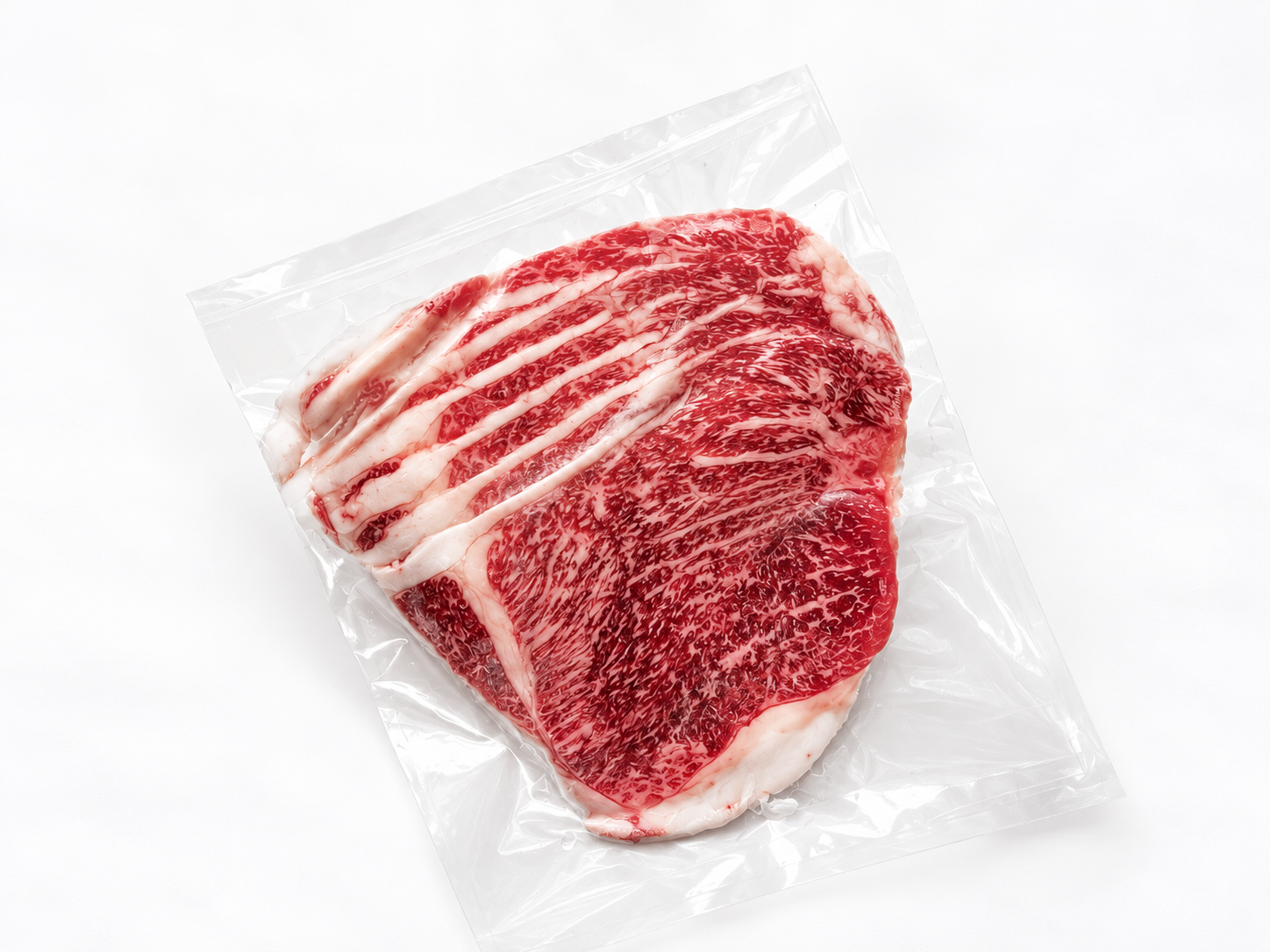
1. What part of the beef is the Sotomomo?
Sotomomo (Outside Round / Gooseneck Round) is the meat on the outer side of the hip and hind leg, adjacent to the Ranichi (Rump and Ichibo).
This part consists of muscles used for weight-bearing and regular movement, resulting in a soft yet firm texture.
The highlight of Sotomomo is its relatively low fat content. The red meat has fine fibers and a distinct beef flavor. When chewed, you gradually experience the natural intensity and umami of the meat.
Since it is not very fatty, it is ideal for those who prefer lean meat with a clear flavor profile.
2. The Charm and Popularity of Sotomomo
Sotomomo can be harvested in large pieces and has a high usable meat ratio, making it a cost-effective choice for restaurants or meat processing businesses looking to control costs.
With its low fat content and relatively uniform shape, it can be cut and processed in various ways, such as thin slices, cubes for stews, or ground for Hamburg steaks.
Furthermore, it is suitable for roast beef, stews, or everyday red meat dishes, making it a highly versatile cut.
Sotomomo is therefore ideal for those looking for low-fat red meat with intense flavor and a distinct chew.
3. Recommended Cooking Methods and Dishes
Roast Beef
One of the most suitable cooking methods for Sotomomo. Using low heat and slow-cooking helps maintain the meat's juiciness while clearly bringing out the red meat flavor.
Stewed Dishes / Beef Stew (Beef Stew / Braised Beef)
When slow-cooked for an extended period, the meat gradually softens while its flavor melts into the broth or sauce, resulting in a rich and well-rounded taste.
Sukiyaki / Shabu-Shabu
Slicing the meat very thin helps reduce the feeling of firmness and allows for a clear experience of the light and clean red meat flavor.
Beef Katsu / Stir-fried Beef
Cutting the meat into thin or bite-sized pieces and cooking for a short duration reduces the chance of the meat becoming tough from the heat, while preserving the texture and flavor of the red meat.
Knuckle (シンタマ/Shintama)
Shintama (Knuckle)
~ Clean-tasting red meat with moderate marbling, offering a balance of tenderness, juiciness, and flavor ~
Product Information
Weight per head: approx. 24 kg
Weight per box: approx. 24 kg
Size: Standard Cut
1. What part of the beef is the Shintama?
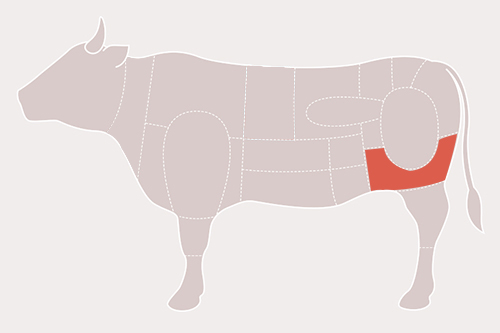
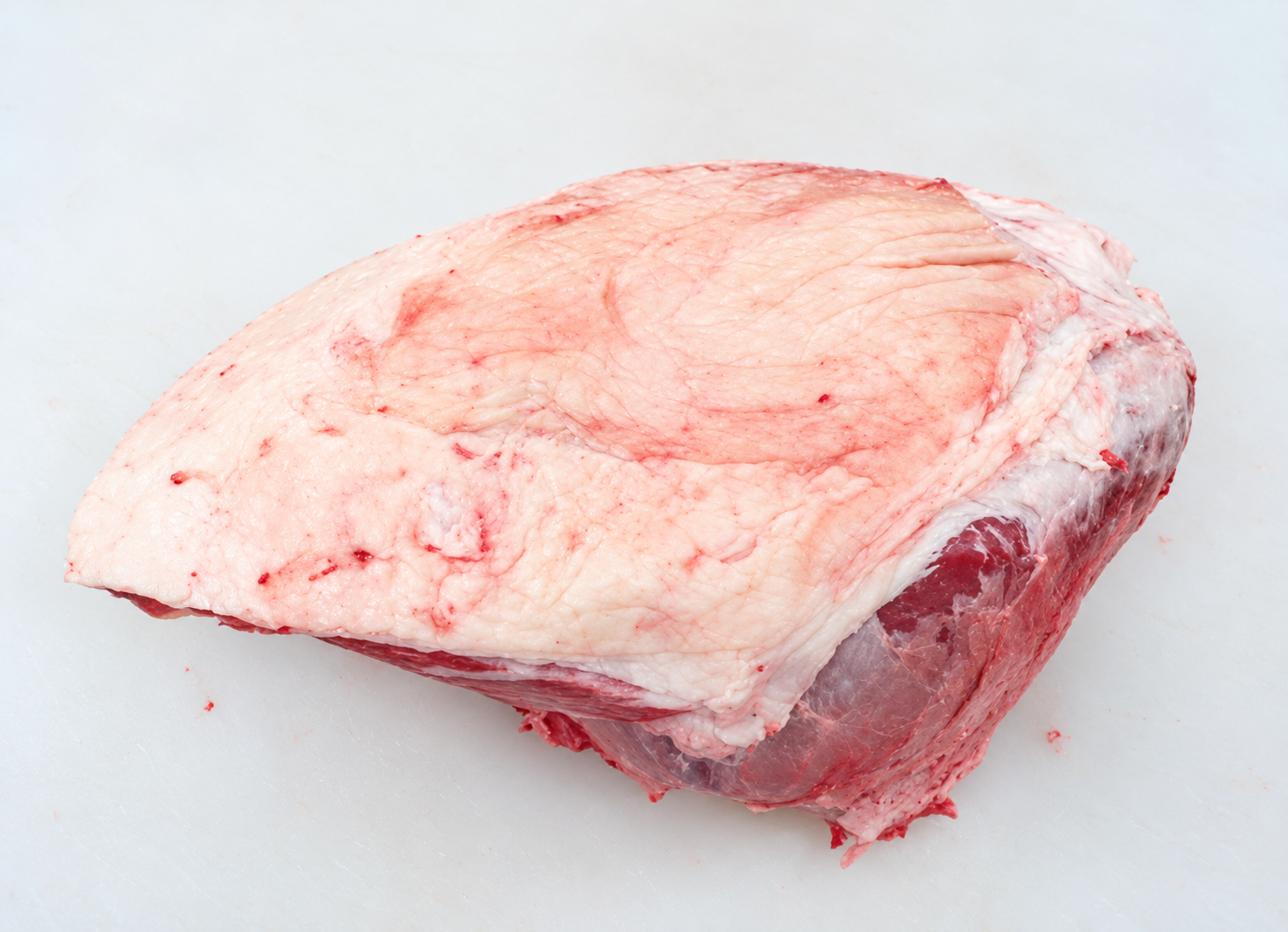
Shintama (Knuckle) is the red meat at the front of the hind leg. It has a relatively round shape, making it a cut that can be trimmed and divided into several sub-cuts.
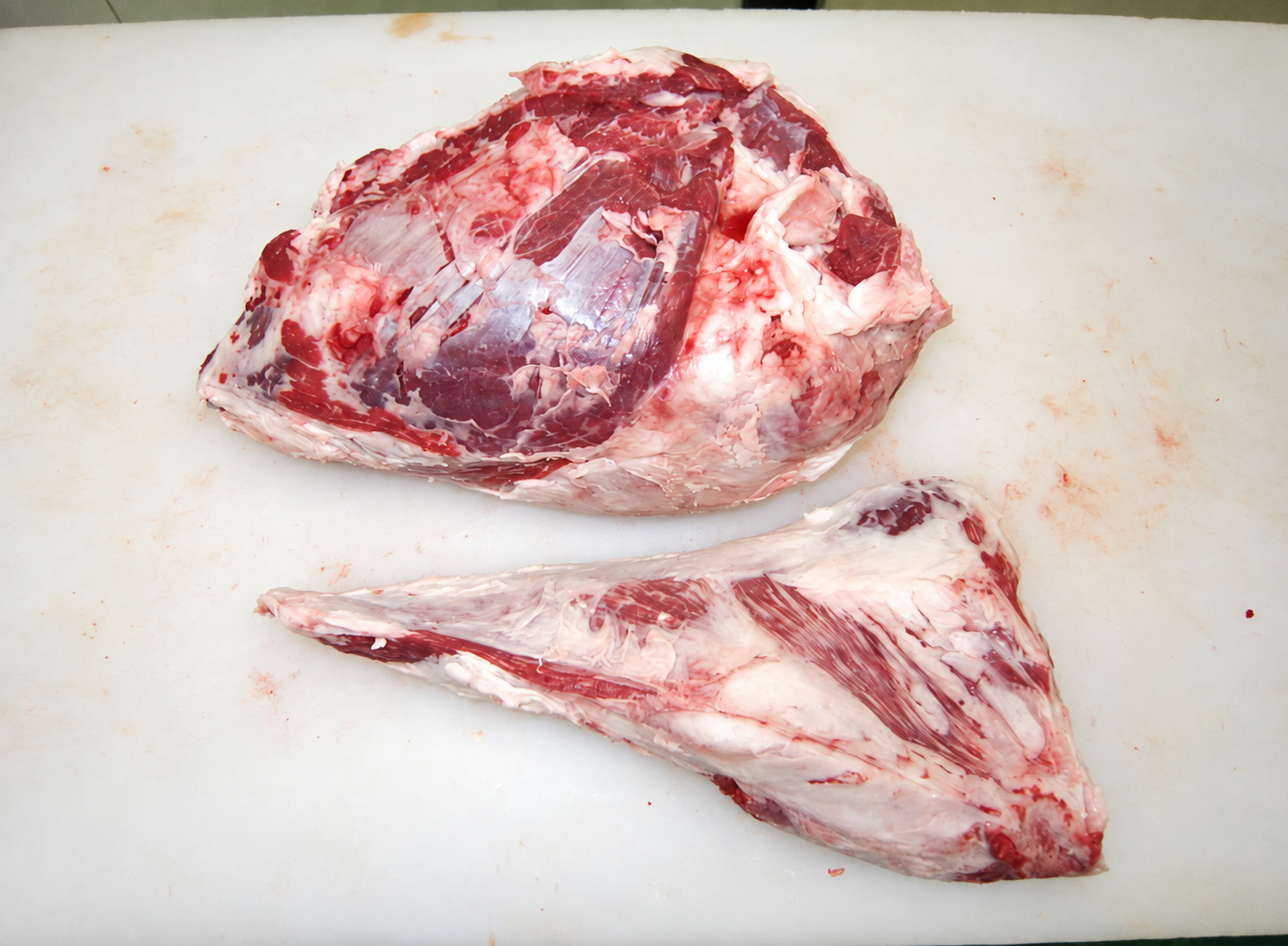
Common sub-cuts include Tomosankaku, Shinshin, and Kamenoko, each with different textures and marbling levels.
Shintama is relatively low in fat. The meat is firm and elastic but still has fine fibers, along with a moderate level of marbling (Sashi). It is considered a well-balanced cut between red meat flavor and juiciness from fat.
2. The Charm and Popularity of Shintama
Balance between red meat and marbling
It offers a light and clean red meat flavor characteristic of leg cuts, with marbling that adds just the right amount of tenderness and juiciness.Well-rounded flavor, easy to eat
It is not overly greasy and does not have an overpowering red meat taste or smell, making it easy to eat and suitable for a wide range of consumers.Each sub-cut has unique characteristics
Separating the Shintama into sub-cuts allows for a variety of flavors and textures, such as Kamenoko with its distinct red meat character, or Tomosankaku with more marbling and exceptional juiciness.
3. Recommended Cooking Methods and Dishes
With its fine fibers, Shintama is suitable for both quick-grilling thin slices and thick-cut cooking with precise heat control.
Yakiniku
Thinly slicing Shintama and quickly grilling the surface helps maintain tenderness and brings out the sweetness of the marbling.
It can be enjoyed with a slightly sweet Yakiniku sauce or wasabi shoyu to enhance the meat's flavor without masking its natural taste.
Roast Beef / Steak
Due to its relatively round shape and fine fibers, Shintama is ideal for roast beef or steaks.
Proper temperature control ensures the interior remains juicy and tender while fully bringing out the red meat flavor.
Beef Tataki / Beef Sushi
With its clean and light flavor, Shintama is perfect for quick surface searing for Beef Tataki or as a topping for Beef Sushi.
Lightly searing the surface adds aroma while preserving the tenderness and flavor of the meat.
NECK
Neck
~ A neck cut packed with flavor and collagen, ideal for stews and dishes requiring intense meat flavor ~
Product Information
Weight per head: approx. 24 kg
Weight per box: approx. 24 kg
Size: Standard Cut
1. What part of the beef is the Neck?
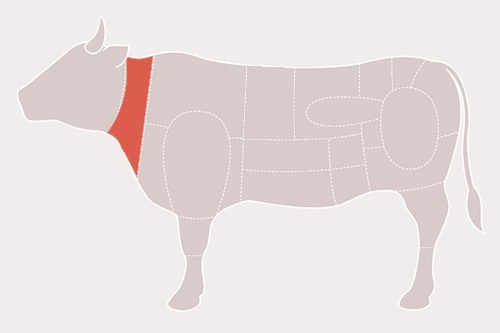
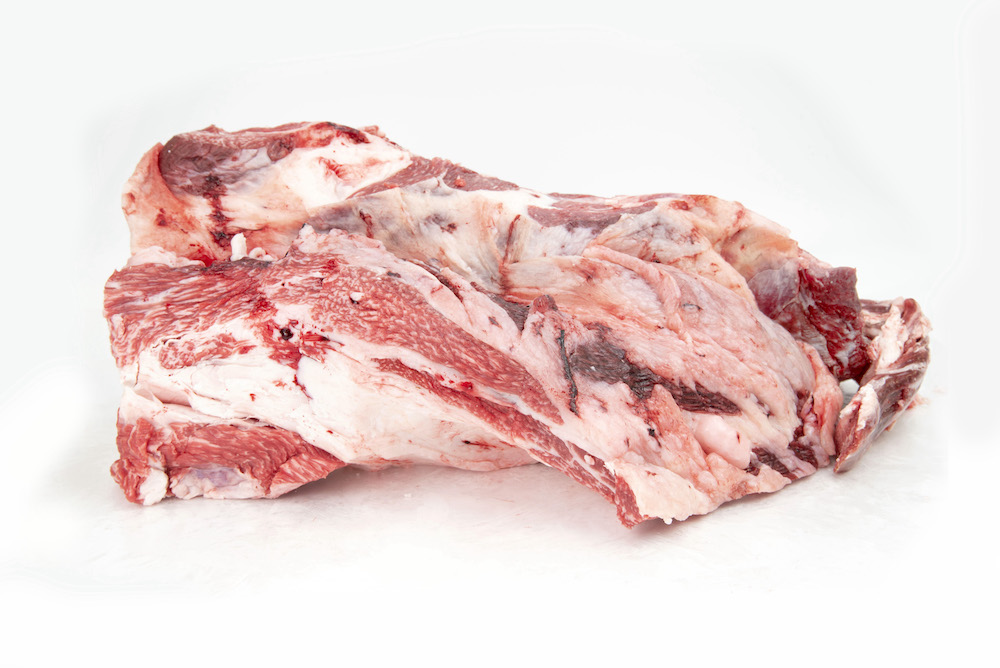
Neck is the meat in the neck area of the cow. It is a muscle that supports the head and moves frequently, resulting in highly developed musculature.
For Wagyu Neck, the meat is relatively low in fat and firmer than other parts, but it stands out for its intense flavor and high content of connective tissue and collagen.
When prepared with appropriate methods, it clearly expresses the flavor and richness of the meat, especially in dishes that require long cooking times.
2. The Charm and Popularity of Neck
Intense meat flavor
Since it is a heavily used muscle, it has a distinct red meat flavor and umami. Proper cooking yields a deep, rich taste.Becomes significantly tender with long cooking
Connective tissue and collagen within the meat turn into gelatin when heated for a long time, transforming the firm meat into a tender texture and adding richness to the broth.Ideal for ground meat and stocks
With its distinct flavor and low fat content, it enhances the meatiness and intensity of dishes like Hamburg steaks or other ground meat recipes.
3. Recommended Cooking Methods and Dishes
Since the neck has a firm texture, the best cooking methods are long-term stewing or fine grinding/mincing to make it easier to eat and fully extract its flavor.
Stewed Dishes / Beef Stew / Curry / Soup
Slow-cooking the neck for an extended period softens the connective tissue and collagen, making the meat tender enough to pull apart easily.
Meanwhile, the meat's flavor melts into the broth, adding intensity and depth to the dish.
Hamburg Steak / Minced Beef
Grinding or mincing the neck provides a firm texture and a clear meatiness without relying on high fat content.
It is suitable for Hamburg steaks, beef balls, or mixing with other cuts to enhance the overall meat flavor.
Consommé / Bolognese
The neck is also an excellent ingredient for flavoring soups and sauces. Long simmering adds intensity and dimension to the flavor.
When ground and used in Bolognese sauce, it provides a distinct and well-rounded meat flavor, ideal for dishes requiring extra intensity.
KATABARA
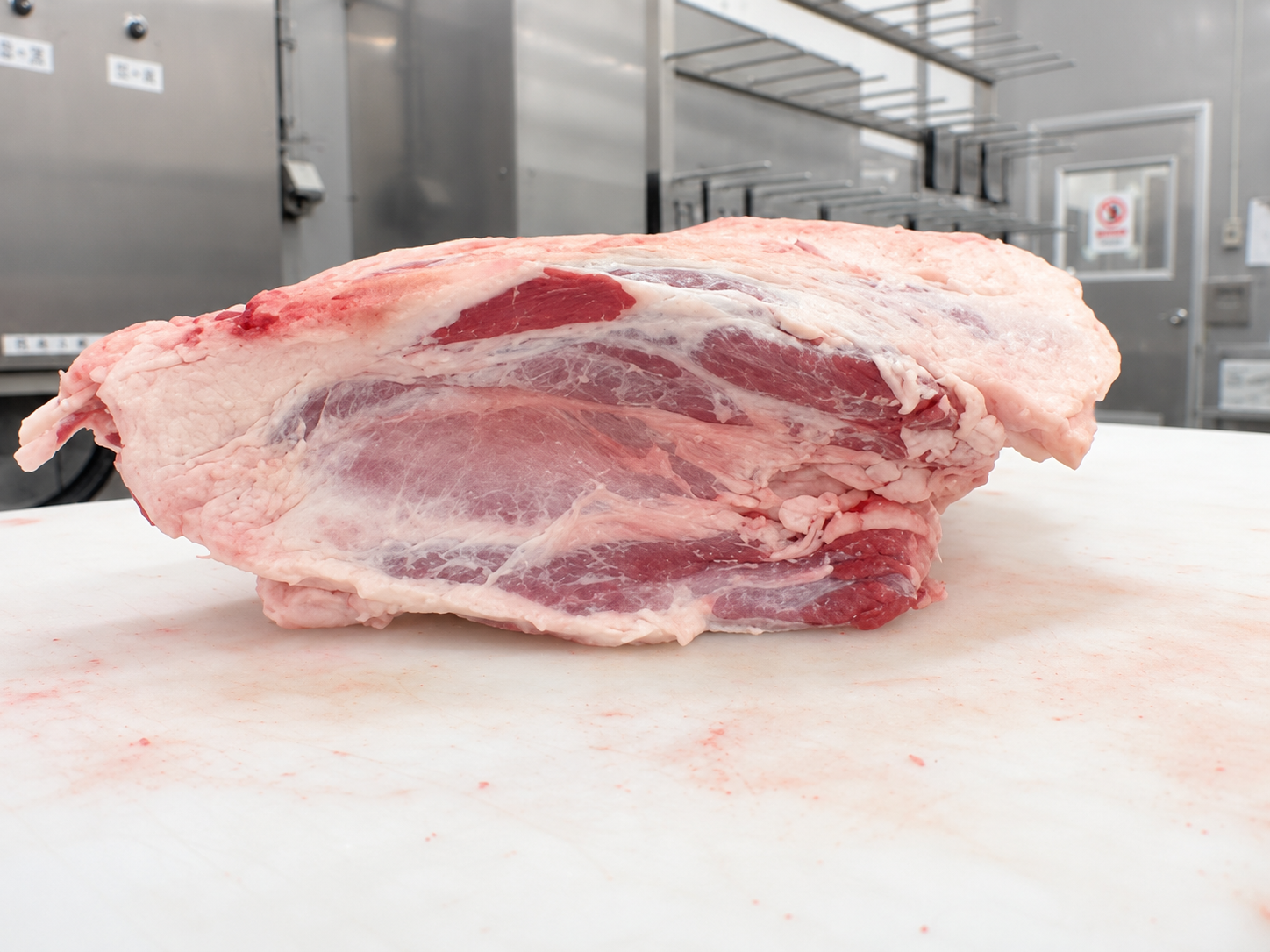
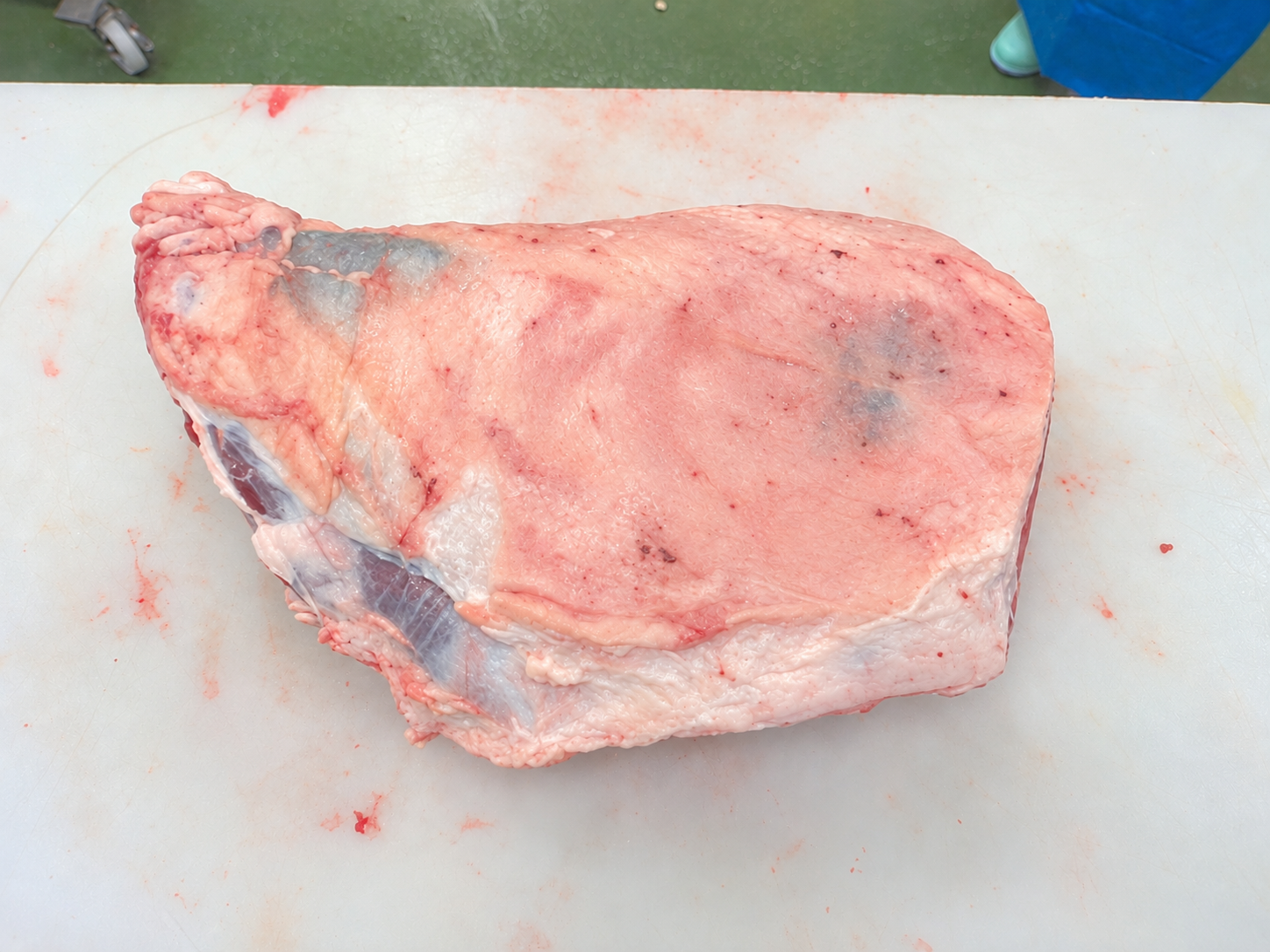
Katabara (Brisket)
~ Intense flavor that blends red meat umami with high-quality Wagyu fat; the more you chew, the deeper the flavor ~
Product Information
Weight per head: approx. 24 kg
Weight per box: approx. 24 kg
Size: Standard Cut
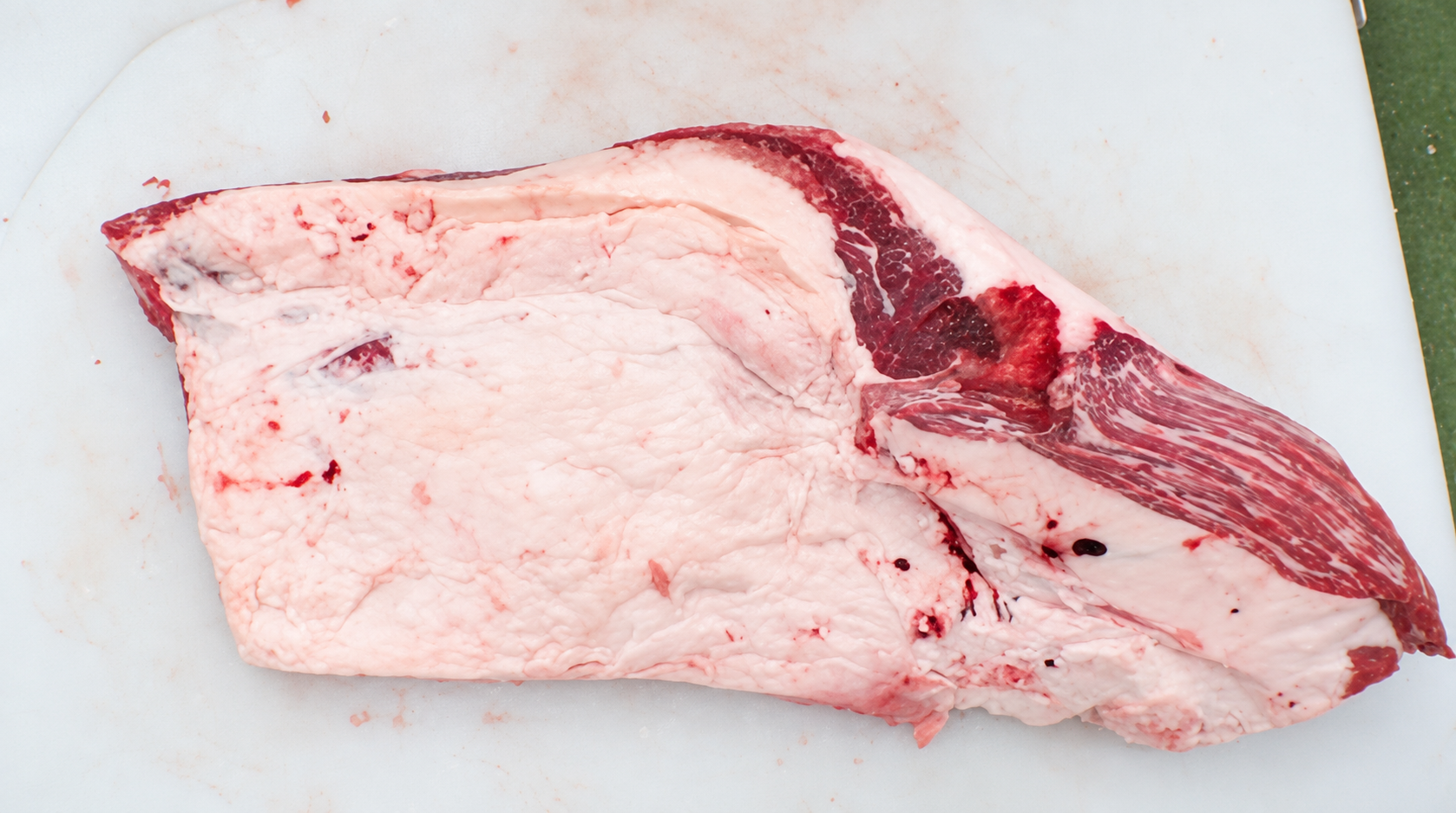
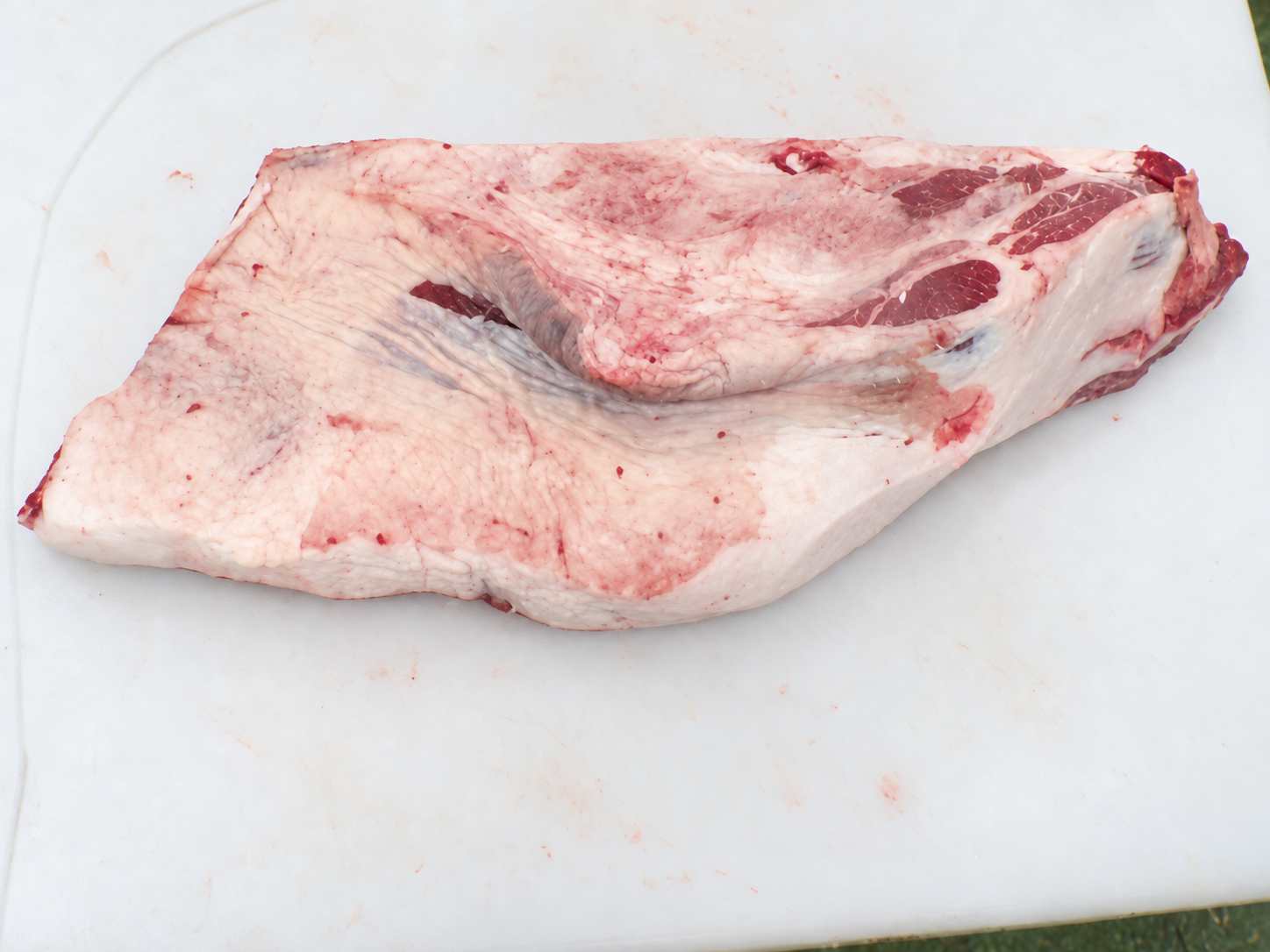
1. What part of the beef is the Katabara?
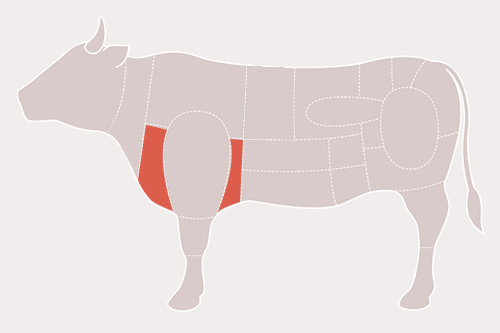
Katabara (Brisket) is the meat on the chest and front belly of the cow, located near the front leg and in front of the Tomobara (Short Plate).
As a muscle that supports and moves the front legs, this cut has a firm structure and an exceptionally intense red meat flavor.
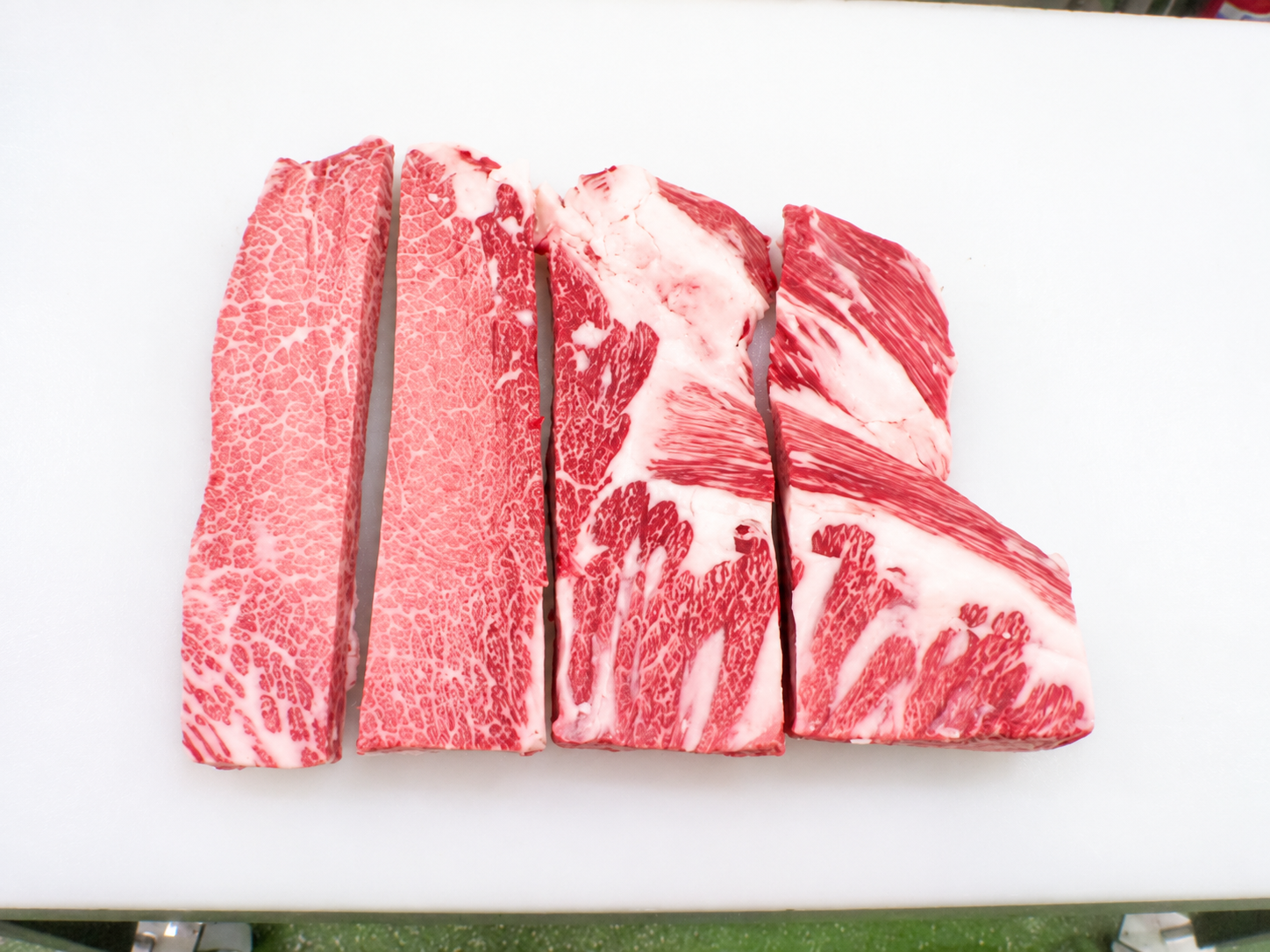
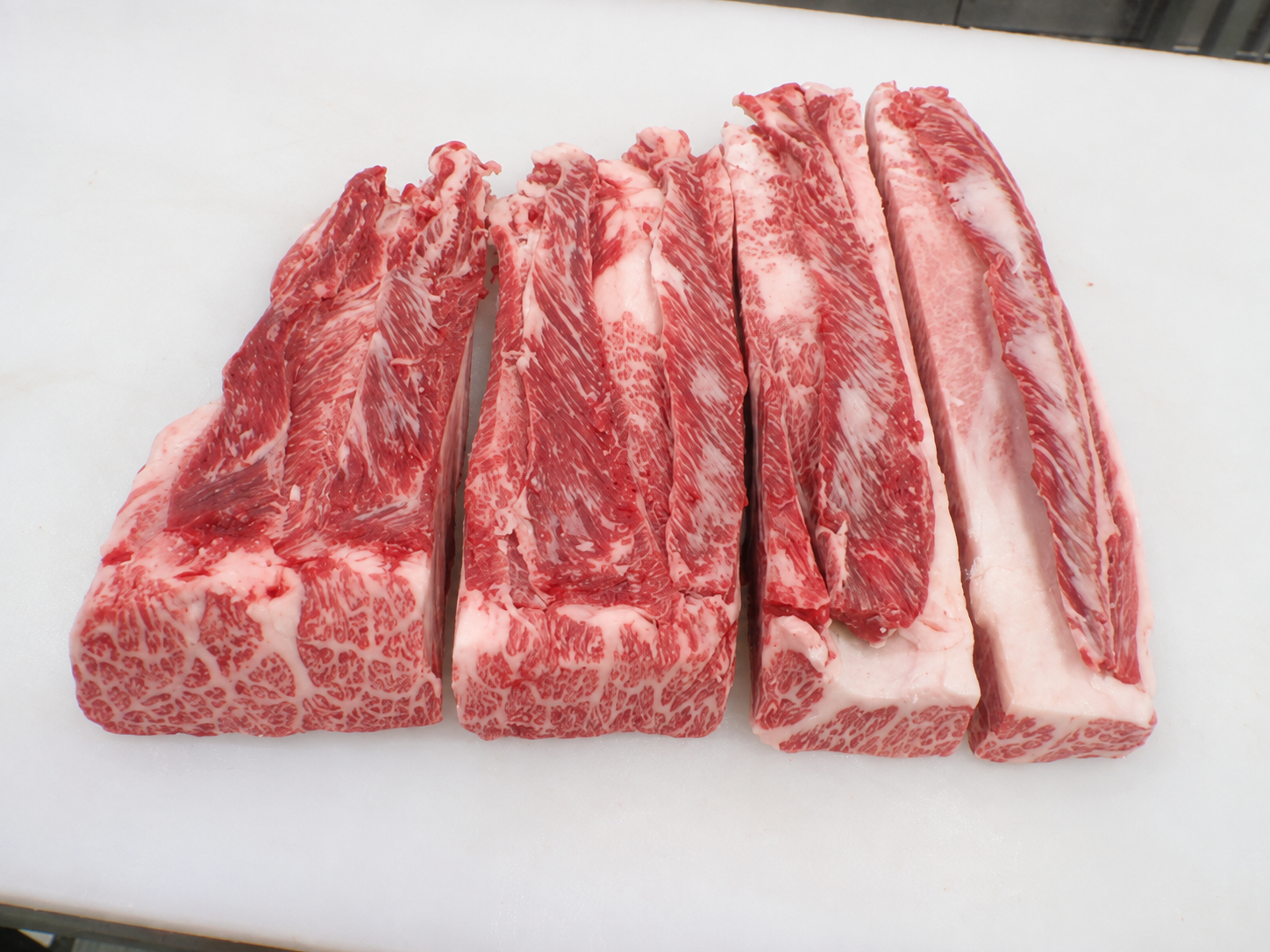
For Wagyu Katabara, the red meat and Wagyu fat are layered, with a significant amount of collagen present.
When slow-cooked, the fat and collagen gradually melt, enhancing the juiciness, intensity, and the unique Wagyu Aroma.
2. The Charm and Popularity of Katabara
Katabara stands out for both its red meat flavor and fat sweetness, making it versatile for various cuisines, from grilled dishes and soups to stews requiring intense meat flavor.
In Thailand and many Southeast Asian countries, this cut of meat is popular for the Crying Tiger (Suea Rong Hai) dish. It is charcoal-grilled to achieve an aromatic flavor and served with various dipping sauces.
Meanwhile, Brisket is also one of the most popular cuts in American BBQ, especially when large pieces are slow-smoked at low temperatures for extended periods. This method pairs exceptionally well with the fat and collagen characteristics of Wagyu beef.
Additionally, it can be thinly sliced for hot pot or sukiyaki, or used in braised dishes, making it a highly versatile cut suitable for restaurants looking to develop a diverse menu.
3. Recommended Cooking Methods and Dishes
Charcoal-Grilled Wagyu / Crying Tiger (Thai Style Charcoal Grilled Wagyu)
Lightly score the surface of the meat before charcoal-grilling until aromatic. This enhances both the flavor of the red meat and the sweetness of the Wagyu fat.
It is ideal when served with sour and spicy dipping sauces to cut through the richness.
Wagyu BBQ Brisket
Smoke the entire piece of meat at a low temperature for an extended period, allowing the fat and collagen to slowly melt into the meat.
This results in a tender, juicy texture with a smoky aroma, perfect for American BBQ-style dishes.
Sukiyaki / Hot Pot / Shabu-Shabu (Wagyu Sukiyaki / Hot Pot / Shabu-Shabu)
When Kabatara (Brisket Flat) is thinly sliced, it cooks quickly in hot broth, and some of the fat melts away, resulting in a well-balanced and easy-to-eat flavor.
Braised Wagyu / Wagyu Soup
Slow-braising at low temperatures for an extended period helps the connective tissues and collagen gradually soften, making the meat more tender. Meanwhile, the Wagyu flavor dissolves into the soup, enhancing the richness and depth of the dish.
SHANK
Shank
~ A leg cut packed with umami and collagen, ideal for braised dishes and rich broths ~
Product Information
Weight per cattle: Approximately 18 kg
Weight per box: Approximately 18 kg
Size: Standard Cut / 4P Cut
1. What is Beef Shank?
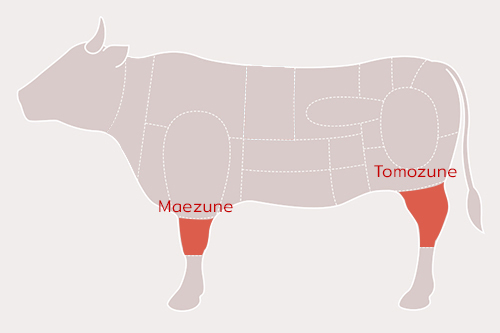
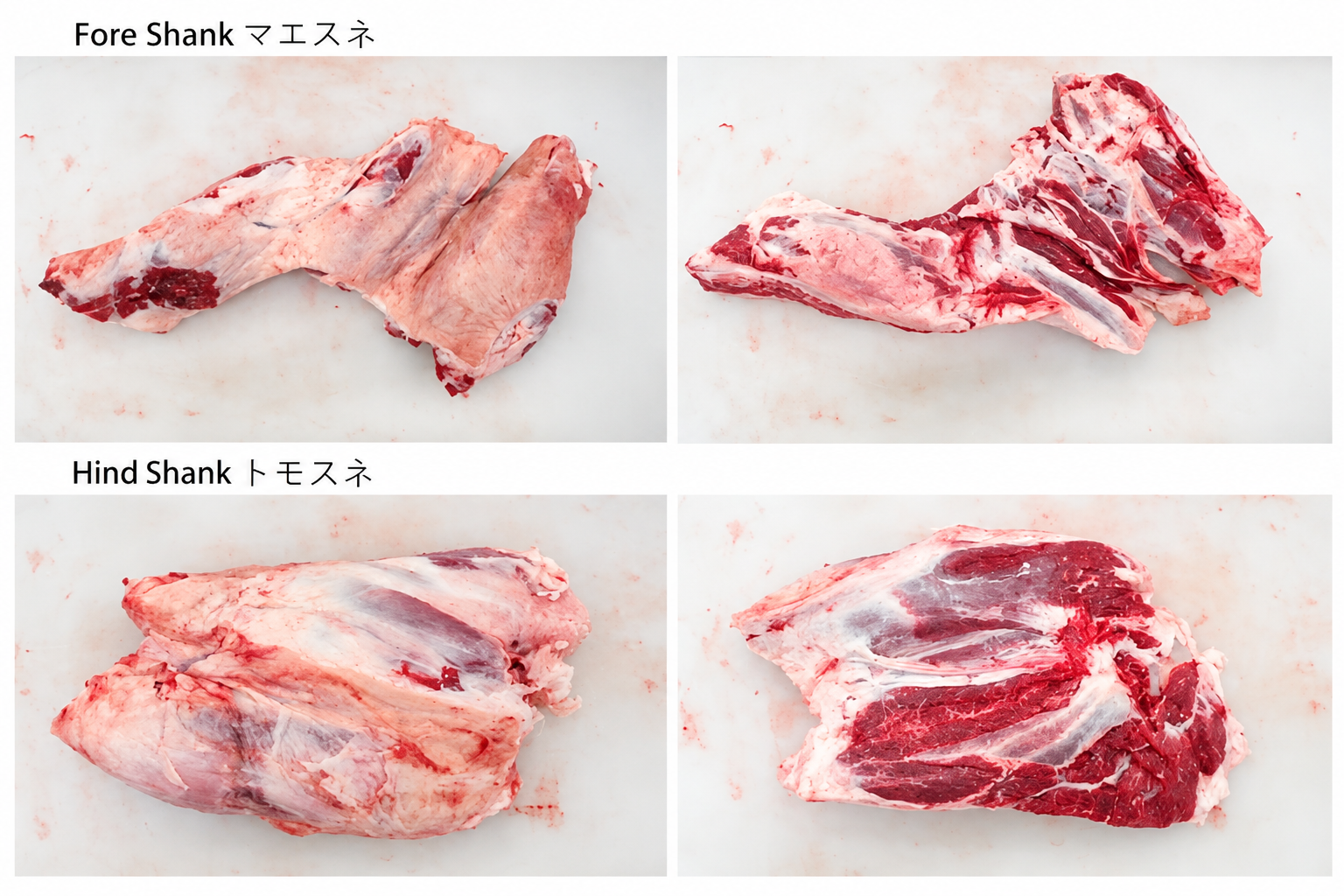
Shank, or beef leg meat, is the cut from the lower leg of the cattle. It can be divided into two main parts: Foreshank and Hindshank.
This cut consists of muscles that support the animal's weight and are constantly used, resulting in a dense muscle and tendon structure.
Although not very fatty, shank contains high amounts of connective tissue and collagen. The Foreshank is typically smaller and firmer, while the Hindshank is larger and has more collagen.
When cooked at high temperatures for an extended period, the collagen gradually converts into gelatin, tenderizing the meat and adding richness and depth to soups or sauces.
2. The Appeal and Popularity of Shank
Shank is a cut that imparts excellent flavor and umami to broths, making it ideal for braised dishes and soups requiring a rich beef flavor.
In Thailand and Southeast Asian countries, leg meat is popular in dishes such as beef noodles, braised beef, and Tom Zap beef soup, which require long simmering to extract the full flavor of the meat.
Using Wagyu shank further enhances both the richness of the broth and the unique character of the dish, making it suitable for restaurants aiming to differentiate themselves or develop premium menu items.
Additionally, shank is well-suited for cooking in large quantities because, when properly braised, the meat gradually tenderizes and can be easily prepared in advance for restaurants.
3. Recommended Cooking Methods and Dishes
Wagyu Stew / Braised Shank
Slow-braising at low temperatures for an extended period allows the connective tissues and collagen to gradually convert into gelatin, making the meat tender enough to fall apart easily while releasing its flavor into the sauce or broth.
Wagyu Beef Noodles / Tom Zap Soup (Thai Beef Noodle / Tom Zap Soup)
The flavor from the shank slowly dissolves into the broth when simmered for a long time, providing a richness and umami that pairs well with Thai herbs and spices.
This is ideal for beef noodle dishes, braised beef, or Tom Zap soup that require a deep and well-balanced broth.
Pot-au-feu / Beef Consommé
The entire piece of meat can be slowly simmered to maintain its shape while extracting its flavor into the broth.
This is suitable for Western-style soups that require a clear broth with a rich and complex beef flavor.
Wagyu Curry
When shank is diced and braised in curry, the flavor and gelatin from the meat gradually dissolve into the sauce, enhancing the richness and depth of the curry.
Even when the dish cools, the rich flavor of the meat remains distinctly perceptible.