




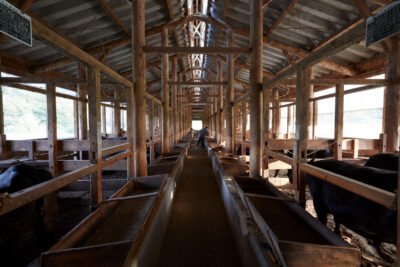
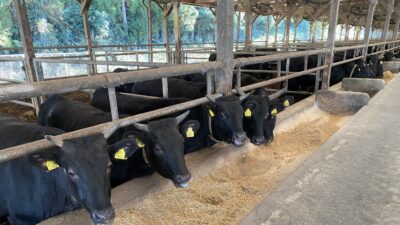
From Newborn Calf to the Dining Table
Cattle farming in Japan is generally divided into two types of farms: breeding farms and fattening farms. Breeding farms are responsible for producing and raising calves, while fattening farms purchase those calves and raise them until they are ready for meat production.
Breeding Farms
Breeding farms specialize in calf production. They typically use artificial insemination with semen from carefully selected, high-quality sires.
After a gestation period of approximately 10 months, the cow gives birth to a calf. During the first 3 months, the calf primarily receives milk and early-stage concentrate feed. Then, they are gradually transitioned to high-quality roughage and other types of feed.
At approximately 9–10 months of age, weighing around 280–300 kg, the calves are sent to a livestock market, commonly known as a “calf market,” to be sold to fattening farmers.
Fattening Farms
Fattening farms purchase calves and continue to raise them until they reach the appropriate size and physical condition for meat production.
For Wagyu, fattening farms generally purchase calves at 8–10 months of age and fatten them for approximately 20 more months before shipping them at around 30 months of age.
During the early stage of fattening, cattle receive roughage such as grass and hay, along with a balanced proportion of grain-based concentrate feed to develop a strong body structure and sufficient muscle mass.
During the middle and late stages of fattening, the proportion of grain-based concentrate feed, such as barley and corn, is gradually increased and adjusted to the growth and health of each individual animal. During this period, intramuscular fat, also known as “marbling,” develops, contributing to the unique quality and texture of Wagyu beef.
Typical Wagyu Rearing Period
The rearing period for Wagyu cattle, particularly Japanese Black, is generally about 28–32 months from birth until shipping. During this time, the cattle may weigh approximately 700–800 kg.
Generally, the calf-rearing stage lasts from birth until about 9 months of age, followed by a fattening stage of approximately 20 months. Many Wagyu cattle are sent to the meat market or slaughterhouse at around 30 months of age.
Rearing Periods and Requirements for Major Wagyu Brands
Certain Wagyu brands have specific requirements regarding rearing periods and production conditions.
Kobe Beef
Cattle raised for Kobe Beef production are typically reared until 8–9 months of age before entering the calf market. They are then fattened for about 2 years and are usually shipped at 30–32 months of age.
According to official standards, the cattle must be at least 28 months old, with the average shipping age being approximately 32 months.
Matsusaka Beef
Standard Matsusaka Beef does not have a single uniform minimum shipping age requirement.
One key requirement is that the cattle must enter the designated Matsusaka Beef production area by 12 months of age. The duration spent in that area must be the longest compared to any other region, and it must be the final rearing location before shipping.
Special Matsusaka Beef
Special Matsusaka Beef is a category distinguished by an exceptionally long fattening period.
Calves originating from Hyogo Prefecture are brought into the Matsusaka Beef production area and must be fattened within that area for at least 900 days.
Consequently, the cattle are often 38 months or older at the time of shipping, making the rearing period significantly longer than that of standard Matsusaka Beef.
Yonezawa Beef
Yonezawa Beef also includes long-term fattening requirements in its production standards.
According to current requirements, eligible cattle must be uncalved Japanese Black females and must be at least 33 months old at the time of shipping.
Tokyo Metropolitan Central Wholesale Market – Meat Market
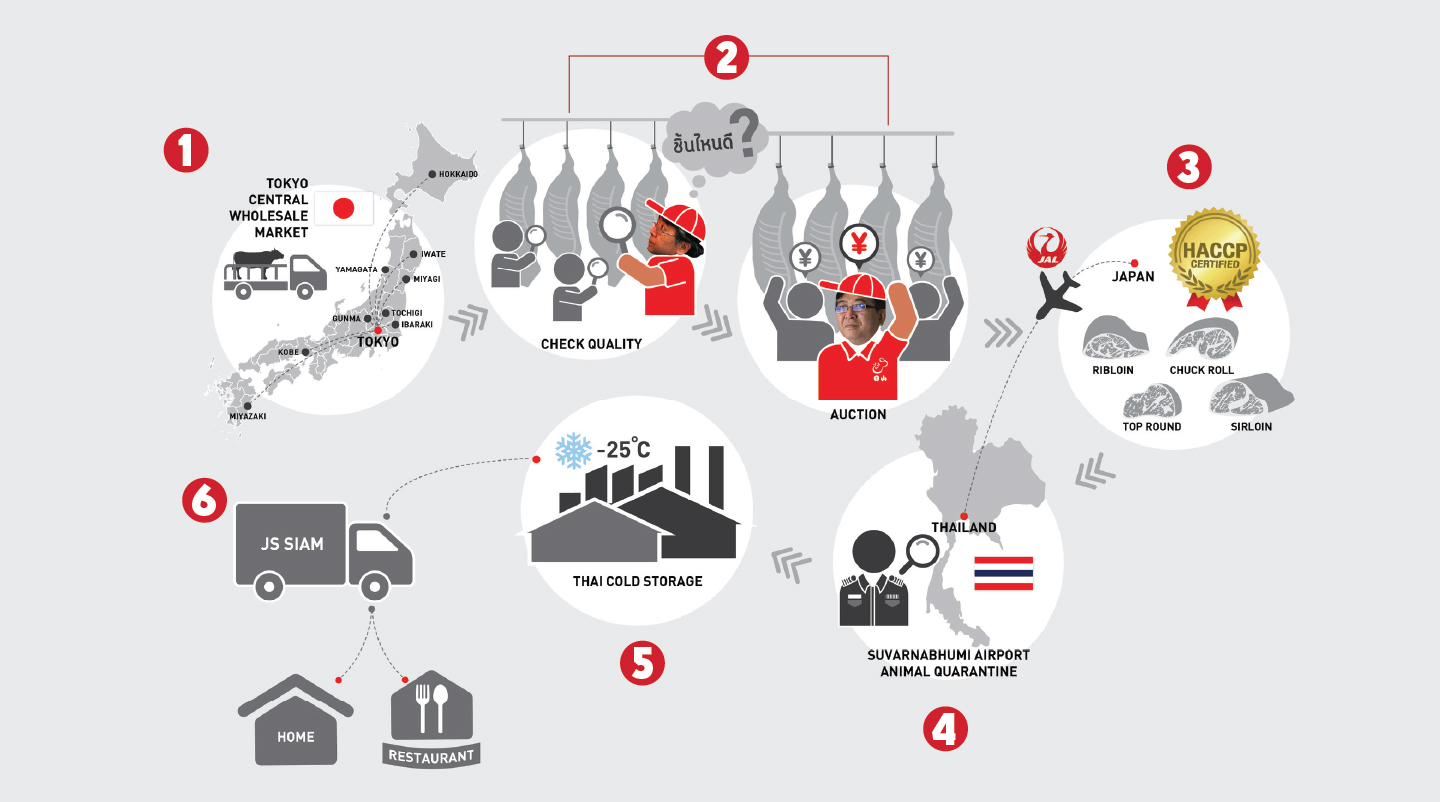
While Japan has many slaughterhouses nationwide, the Tokyo Metropolitan Central Wholesale Market – Meat Market, located in the Konan district of Minato Ward, Tokyo, is considered one of the country's largest meat distribution hubs.
This market is connected to the Shibaura Slaughterhouse. Processes ranging from the slaughtering and dressing of cattle and hogs to carcass grading, auctions, and wholesale distribution are all conducted within the same facility.
Each year, approximately 90,000 cattle are processed, averaging about 360 head per day.
Cattle, including Wagyu, are transported from production areas across Japan, particularly from Northern Kanto and the Tohoku region, as well as areas ranging from Hokkaido in the north to Kagoshima in the south.
In addition to stabilizing the meat supply for the Tokyo metropolitan area, this market plays a crucial role in determining national beef carcass prices.
The carcass prices established through trading at the Tokyo Meat Market serve as one of the primary price benchmarks for beef trading in Japan.
For this reason, carcass prices at the Shibaura market are closely monitored by cattle producers, fattening farmers, meat wholesalers, and meat industry operators nationwide.
Pre-Slaughter Inspection
Live cattle transported from various regions across Japan must first undergo an ante-mortem inspection by meat inspection veterinarians.
Each animal is thoroughly examined for external appearance, gait and movement, general condition, and any signs of disease or health abnormalities.
The cattle are then brought into the slaughter and dressing process at the Shibaura Slaughterhouse, where the hide is removed, internal organs are extracted, and the animal is dressed into a carcass.
The inspection process does not end while the cattle are still alive.
Veterinarians also conduct inspections at multiple stages of the production process, from pre-slaughter to head, viscera, and carcass inspections.
Every animal is inspected individually to detect diseases and abnormalities and to evaluate whether the meat is fit and safe for human consumption.
Only meat that passes these inspections is permitted to enter the food distribution system.
Japanese Beef Grading
After passing the meat hygiene inspections, each carcass is graded by certified graders from the Japan Meat Grading Association (JMGA).
Japanese beef carcasses are evaluated using two grading systems:
Yield Grade:
A, B, or C
Meat Quality Grade:
5, 4, 3, 2, or 1
The two grades are then combined into the familiar levels, such as:
A5, A4, or B5
The quality assessment does not only consider the level of intramuscular fat or marbling, but also evaluates other factors, including:
Meat color and brightness
Meat firmness and texture
Color, luster, and quality of fat
For more information regarding the Japanese beef grading system, further details can be found on this page.
Auction and Carcass Processing
Once grading is complete, the carcasses are put up for auction within the market. The primary buyers are intermediate wholesalers and other meat business operators.
Carcasses purchased at auction undergo deboning and trimming by intermediate wholesalers or meat processing companies before being divided into large meat portions or primal cuts.
According to Japanese beef cut trading standards, a carcass is divided into 13 main parts, which include sections such as:
Chuck Roll
Ribeye
Sirloin
Tenderloin
Inside Round
Outside Round
Shank
Each part is then further trimmed according to its intended use, such as:
Steak, Yakiniku, Shabu-shabu, and other types of dishes.
Processed meat cuts are vacuum packed to maintain freshness and hygiene before being stored and distributed under appropriate temperature-controlled systems.
During refrigerated storage, the beef may undergo an aging process for a certain period, which helps increase tenderness and develops a deeper flavor profile.
About the Beef Traceability System
Beef Traceability
Essentially, every head of cattle raised within Japan is assigned a unique 10-digit individual identification number.
This number is used to record various animal data in a national database, such as:
Date of birth
Sex
Breed
Place of birth
Rearing locations
Movement history
Even after the cattle are slaughtered and processed into beef, the production and distribution history can still be traced using the individual identification number, as well as lot numbers or other traceability data where applicable.
Consumers can also use this identification number to verify where the cattle were born and where they were raised.
This traceability system is a vital part of ensuring transparency and food safety within Japan's beef supply chain.
For more information regarding beef traceability using individual identification numbers, you can click here for further details.